HOW TO SURVIVE A REMODEL WHEN YOU ONLY HAVE ONE BATHROOM
Remodeling a bathroom is one of the most effective ways to upgrade your home's value and improve daily functionality. However, taking on a full renovation when your home has only one bathroom presents a major logistical challenge. Losing access to essential plumbing fixtures requires careful planning between the homeowner and the general contractor before demolition begins.
MANAGING TOILET ACCESS DURING DEMOLITION AND BUILD-OUT
For most single-bathroom households, the primary concern is retaining access to a working toilet throughout the renovation process. During minor or mid-level remodels, a thoughtful contractor can often maintain temporary toilet function.
In these scenarios, the contractor disconnects and removes the toilet during working hours to allow for wall framing, drywall, painting, or tile installation. Before leaving the job site at the end of each day, the crew sets the toilet back over the closet flange with a temporary wax ring or reusable rubber seal, reconnects the flexible supply line, and restores water flow. This ensures the household has a functioning toilet overnight and on weekends.
ALTERNATIVE SANITATION SOLUTIONS FOR MAJOR OVERHAULS
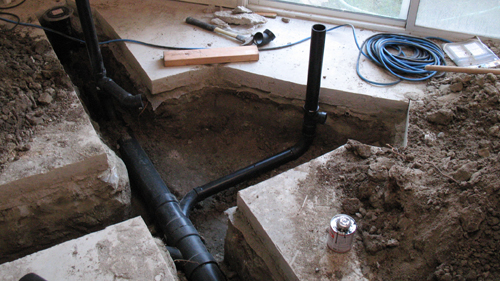
When a project involves a total teardown such as re-strapping joists, replacing subfloors, or relocating supply lines and drain pipes leaving the toilet in place overnight is not feasible. Open subfloors and modified drain-waste-vent (DWV) stacks prevent daily reinstallations.
In these situations, renting a portable restroom is the most practical solution. Homeowners should consider placement options that prioritize privacy and ease of access:
Backyard Placement: Setting the unit in a gated backyard provides privacy from neighbors and hides the unit from street view.
Garage Placement: If weather conditions are extreme, some portable sanitation providers permit placement inside a well-ventilated garage. Homeowners must consult with the rental company first to ensure their delivery driver can maneuver the unit safely and that proper air turnover is maintained.
PREPARING FOR TEMPORARY FIXTURE DISRUPTION
While daily toilet access can often be arranged, bathing facilities will remain offline for extended stretches during a remodel. Tile showers, tub surrounds, and waterproofing membranes require full curing times before exposure to moisture.
For daily hygiene during construction, homeowners can make arrangements to use the kitchen sink for basic wash-ups, utilize local gym facilities, or stay with nearby family members during the critical tile and waterproofing phases. Establishing clear expectations with your contractor prior to signing the contract eliminates surprises and keeps your household functioning throughout the project.
THREE ESSENTIAL CONSTRUCTION TIPS FOR SINGLE-BATHROOM REMODELS
Seal Open Drain Lines Promptly
Whenever a toilet or drain fixture is removed from the floor, immediately plug the open waste pipe with a mechanical test plug or an airtight rag bundle. Open drain pipes allow hazardous sewer gas (methane and hydrogen sulfide) to enter the living area.
Use a Reusable Rubber Seal for Daily Re-installations
If your contractor is reinstalling the toilet every evening during construction, request a foam or rubber toilet gasket rather than a standard wax ring. Wax rings deform permanently upon compression and must be replaced every single time the fixture is lifted; reusable synthetic seals maintain their integrity during temporary daily resets.
Cap Water Lines with Dedicated Shut-Off Valves
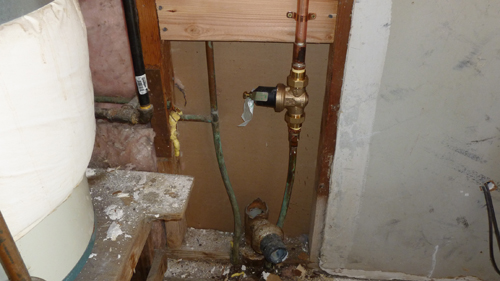
Ensure the contractor installs dedicated quarter-turn stops or caps on exposed supply lines right after demolition. This isolates the bathroom plumbing, allowing the main water supply to the rest of the house (such as the kitchen and washing machine) to stay turned on throughout the project.
BONUS QUESTIONS AND ANSWERS
QUESTION 1: CAN I USE A TEMPORARY FLEXIBLE DRAIN HOSE TO KEEP MY TOILET WORKING IF WE ARE MOVING THE PLUMBING LOCATION?
While flexible hoses might seem like a quick fix when shifting a layout, building codes strictly forbid corrugated or flexible piping on toilet waste outlets. Section P3002.1 of the International Residential Code (IRC) requires all drain-waste-vent (DWV) piping to have smooth interior walls to prevent waste build-up and clogs. Furthermore, toilets rely on a solid, level closet flange anchored rigidly to the subfloor to form a gas-tight seal. Using temporary flexible lines violates drainage slope rules (which require a minimum 1/4-inch fall per foot for 3-inch pipe) and risks releasing sewer gas or wastewater into your floor cavity.
QUESTION 2: WHY DOES MY CONTRACTOR REQUIRE A FULL 24 TO 48 HOURS BEFORE WE CAN USE THE NEW SHOWER AFTER TILING IS COMPLETE?
Allowing proper cure time for tile setting materials and sealants is critical for long-term structural integrity and waterproofing. Under TCNA (Tile Council of North America) standards and manufacturers' guidelines, polymer-modified thin-set mortars require at least 24 hours to cure before grouting, and cementitious or epoxy grouts need an additional 24 to 48 hours to cure fully before exposure to water. Premature exposure to moisture weakens the bond strength of the mortar, causes grout to wash out or discolor, and allows moisture to penetrate behind the tile, leading to subfloor rot and mold growth inside the wall cavity.
QUESTION 3: DO I NEED A PERMIT JUST TO REMODEL AN EXISTING SINGLE BATHROOM IF I AM NOT CHANGING THE FOOTPRINT?
In almost all jurisdictions following the International Building Code (IBC) or International Residential Code (IRC), replacing cosmetic elements like a vanity or paint does not require a permit. However, as soon as the project involves altering underlying mechanical systems such as re-routing water supply lines, moving waste drains, adding electrical outlets (which require GFCI protection under NEC standards), or replacing structural subflooring a permit is legally required. Obtaining a permit ensures an official municipal inspector verifies that all plumbing drains are correctly vented and that moisture-resistant wall backer boards (like cement board) are properly installed to prevent hidden water damage.