PROPER FENCE POST INSTALLATION TO PREVENT WOOD ROT
A perfectly straight, newly built fence is a satisfying sight, but the true test of a quality build lies below the surface. A common and costly oversight in residential fencing occurs during the final grading process. When soil is brought in to level the ground or backfill against a curb, it is easy to inadvertently bury the base of the fence posts. While this creates a visually seamless transition, it introduces a severe structural vulnerability that compromises the lifespan of the entire fence.
THE DANGERS OF IMPROPER BACKFILLING
When a fence is initially installed, the concrete footings might be poured correctly, sitting above the existing grade. However, if the landscaping is subsequently altered and soil is pushed up against the wood, the post becomes partially submerged in dirt. Even a few inches of backfill covering the concrete footing and resting against the timber creates an environment ripe for rapid deterioration.
UNDERSTANDING MOISTURE TRANSFER AND WOOD ROT
Wood that remains in direct, prolonged contact with soil will act like a sponge. Whenever the ground gets moist from rain, sprinklers, or natural groundwater accumulation, the soil retains that water. The wood then absorbs the moisture directly from the wet earth. While water can transfer through concrete, the rate of absorption is significantly lower than when soil is packed directly against the timber.
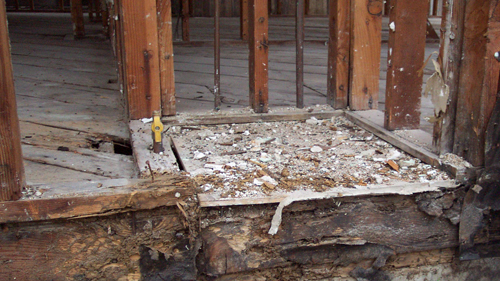
Over time, this continuous exposure to moisture causes the wood fibers to break down. This is why fence posts rarely fail in the middle of the span or deep within the concrete itself. The overwhelming majority of structural failures occur right at the soil line, where the post is subjected to constant wetting and drying cycles along with exposure to soil-borne organisms.
LONG-TERM STRUCTURAL INTEGRITY
To ensure a fence remains standing for decades rather than just a few years, the concrete footing must act as a barrier between the earth and the wood. The top of the concrete pier should ideally sit at least one inch above the final soil grade. This elevation accounts for future accumulation of organic debris, such as fallen leaves and mulch, which can slowly raise the ground level over time. By keeping the concrete slightly elevated, the wood remains isolated from direct soil moisture, preserving the structural integrity of the fence line.
THREE ESSENTIAL TIPS FOR FENCE POST LONGEVITY
Keep concrete footings elevated. Ensure the top of the concrete pour rests a minimum of one inch above the final finished grade of the soil to prevent earth-to-wood contact.
Account for future landscaping. When planning the height of your footings, anticipate the addition of mulch, topsoil, or organic debris that will naturally raise the ground level over the years.
Inspect the soil line regularly. Routinely check the base of your fences to clear away built-up dirt and vegetation that may have accumulated against the wood.
FREQUENTLY ASKED QUESTIONS ABOUT FENCE CONSTRUCTION
To further ensure your fencing projects meet professional standards, it is important to look beyond the soil line and consider the mechanics of the entire footing system. Here are a few more critical aspects of fence installation.
Why Should The Top Of The Concrete Footing Be Domed?
When finishing the concrete footing around a post, the top surface should be troweled smooth and sloped downward away from the wood, creating a dome or crown. According to fundamental building science, flat or concave concrete surfaces allow rainwater to pool against the timber. A domed finish forces water to shed outward and away from the base, drastically reducing moisture penetration at the most vulnerable section of the post.
Why Is A Gravel Base Required At The Bottom Of The Post Hole?
Before setting the post and pouring concrete, placing several inches of crushed gravel at the bottom of the hole is a widely accepted structural best practice. The end-grain of a wooden post is highly porous and absorbs water rapidly through capillary action. If the post is completely encased in concrete at the bottom, any water that seeps down the sides becomes trapped. A gravel base allows excess water to drain freely into the earth below, preventing the base of the post from sitting in standing water.
How Deep Should A Fence Post Footing Be Dug?
While local requirements vary, standard engineering practices dictate that a fence post should be buried to a depth equal to one-third of its total above-ground height, and crucially, the footing must extend below the local frost line. The International Building Code and residential guidelines emphasize frost depth to prevent frost heave. When moisture in the soil freezes, it expands. If the footing does not extend below the maximum depth at which ground water freezes, the expanding ice will push upward, lifting the concrete and throwing the fence out of plumb.