Managing Informal Property Access Points
Human nature naturally drives individuals to find the shortest distance between two points. In landscaping and site management, this tendency often results in the creation of informal dirt trails, frequently referred to as desire paths. While these shortcuts may seem harmless at first glance, they present significant challenges for property owners. Leaving these unpaved access points open can lead to severe liability issues and compromise the overall security of the premises.
The Risks Of Unofficial Pathways
When pedestrians use an unpaved slope or dirt path, especially during inclement weather, the terrain quickly becomes slippery and hazardous. If an individual slips, falls, and sustains an injury on private land, the property owner can be held legally responsible under premises liability laws. Furthermore, these unmonitored trails serve as easy entry points for unauthorized individuals. It is common to find gated properties that have unintentionally left vulnerable gaps along their perimeter, rendering the main security gates entirely ineffective.
Effective Strategies For Securing Boundaries
If an informal trail has developed on a property, immediate action is required to close off the access point. One of the most cost-effective and practical solutions is defensive landscaping. Planting dense, robust bushes directly across the pathway creates a natural barrier that discourages foot traffic. Unlike ground cover plants, which are easily trampled, substantial bushes physically block entry.
For a more permanent structural solution, property owners should consider installing a physical barrier. Extending an existing stucco wall, erecting a chain-link fence, or installing decorative metal fencing will permanently close the gap. Alternatively, if the pathway serves a necessary function, it should be formally converted into a paved, code-compliant walkway to eliminate tripping hazards and ensure safe usage.
Addressing Access During The Site Design Phase
The most efficient way to handle informal pathways is to prevent them from forming in the first place. By thoroughly evaluating pedestrian flow and property boundaries during the initial design and site planning phase, architects and builders can implement proper fencing and landscaping before unauthorized trails are ever established. Taking proactive steps ensures a secure, safe, and liability-free property environment.
THREE KEY TIPS
Implement defensive landscaping by planting dense, mature bushes across informal trails to naturally deter unauthorized foot traffic.
Extend existing structural barriers, such as stucco masonry walls or chain-link fencing, to completely close vulnerable gaps in the property line.
Evaluate expected pedestrian traffic patterns during the initial site design phase to place formal walkways exactly where people will naturally want to walk.
BONUS QUESTIONS AND ANSWERS
To further understand how to manage property access and ensure structural compliance, review these common questions regarding exterior pathways and boundary security.
What Are The Maximum Slope Requirements If I Formalize A Dirt Trail Into A Paved Walkway?
Under the International Building Code and International Residential Code, if you convert a dirt trail into a formalized walkway, the walking surface cannot exceed a slope of 1 unit vertical in 20 units horizontal, which is a 5 percent grade. If the terrain requires a slope steeper than 5 percent, the pathway is officially classified as a ramp. Ramps must not exceed a maximum slope of 1 in 12, or 8.33 percent, and are legally required to have proper landings and handrails installed to prevent slip and fall injuries.
What Are The Footing Requirements For Extending A Masonry Wall To Block An Access Point?
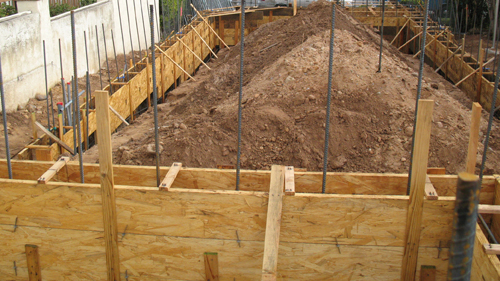
If you choose to extend a heavy stucco or masonry block wall to secure a property line, the new section cannot simply be placed on top of the topsoil. The International Residential Code dictates that masonry walls require continuous concrete footings. To prevent the wall from shifting, settling, or overturning due to frost heave, these footings must extend below the local frost depth line, which varies heavily by jurisdiction but generally requires digging at least 12 inches below undisturbed soil.
Are There Specific Height Regulations When Installing A New Perimeter Security Fence?
While the International Residential Code sets structural parameters for how fences must resist wind loads, the allowable height of a boundary fence is almost entirely dictated by local municipal zoning ordinances. As a universally accepted baseline, residential backyard perimeter fences are typically capped at 72 inches, or 6 feet, in height without requiring a specialized structural engineering permit. Front yard fences, however, are usually restricted to 42 or 48 inches to maintain street visibility and avoid creating blind spots for vehicular traffic.