Strategic Placement And Durability Of Outdoor Pole Lights
Outdoor lighting is essential for property safety, security, and aesthetics, especially in multi-family residential complexes and commercial spaces. However, simply selecting an attractive fixture is not enough. Proper placement and structural durability are critical factors that dictate the lifespan of exterior lighting. Planning ahead can save property owners significant time and replacement costs.
The Vulnerability Of Low Profile Lighting
Low-voltage pathway lights and short bollard poles are highly susceptible to damage when placed in high-traffic areas. Because their standard installation often relies on minimal footings, such as small cylindrical concrete pours or simple ground stakes, they lack the structural integrity to withstand physical impact. In active environments, pedestrians, bicycles, skateboards, and accidental bumps can easily dislodge or completely destroy these fragile fixtures. When the electrical wiring is shallowly buried in the dirt, uprooting the light can also cause serious electrical faults.
Designing For High Traffic Zones
When planning an exterior lighting layout, it is critical to evaluate the daily flow of foot and vehicle traffic. Keep delicate light fixtures away from walkway edges, recreational areas, and tight corners where people frequently cut across the landscaping. If lighting absolutely must be placed in a highly active zone, the fixtures must be engineered with robust, deep concrete footings to ensure long-term stability. Treating these fixtures as structural elements rather than mere landscape accessories is the best way to prevent repetitive damage.
Upgrading To Tall Decorative Pole Lights
To mitigate the risk of continuous damage, property managers and landscape designers should consider utilizing taller decorative pole lights. Fixtures that stand eight to ten feet high elevate the light source and the most fragile components out of the immediate pedestrian impact zone. Furthermore, these pedestrian-scale lights require much more substantial concrete foundations and anchoring systems, making them inherently resistant to casual vandalism and accidental strikes.
Three Key Tips
Assess high-traffic zones before installation to keep fragile, short light fixtures well out of the path of bicycles, skateboards, and heavy pedestrian flow.
Upgrade to eight to ten foot pedestrian-scale pole lights in active outdoor areas to significantly reduce the likelihood of accidental damage and casual vandalism.
Ensure all landscape lighting is installed with secure, properly sized footings rather than relying solely on superficial dirt burial or shallow temporary stakes.
Bonus Questions And Answers
To further expand on proper exterior lighting design, here are a few critical technical considerations that go beyond standard fixture placement.
What Is The Required Depth For An Outdoor Light Pole Footing
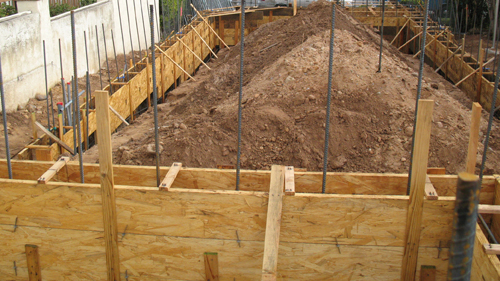
While shallow path lights might only need a minor anchor, structural light poles require footings that extend below the local frost line to prevent frost heave. According to the International Building Code, foundation depths for exterior structures must generally extend a minimum of twelve inches below undisturbed ground surface, but in colder climates, this often means digging thirty-six inches or deeper depending on local jurisdiction limits. Additionally, the National Electrical Code dictates that the accompanying direct-burial electrical wiring must be installed at a minimum depth of twenty-four inches, or eighteen inches if protected by PVC conduit, to prevent accidental severing during routine landscaping.
How Do Wind Loads Affect The Choice Of Outdoor Light Poles
Selecting a taller light pole means introducing new structural variables, most notably wind resistance. The International Building Code requires freestanding exterior structures to withstand specific local wind loads based on geographical mapping. A ten-foot pole acts as a lever against its base during a severe storm, which can cause total structural failure if not properly engineered. This is why taller pedestrian lighting fixtures must be secured to a reinforced concrete base using heavy-duty steel anchor bolts, rather than the simple tube footings used for smaller landscape lights.
What Are The Electrical Safety Standards For Wet Location Lighting
Moving beyond the physical stability of the fixture, the electrical components must be strictly rated for environmental exposure. The National Electrical Code requires any outdoor lighting fixture to be specifically listed for wet locations. This testing ensures that the fixture housing properly drains water and prevents precipitation or groundwater from reaching live electrical components. Furthermore, proper equipment grounding conductors must be routed and bonded to every metallic light pole to successfully clear ground faults and eliminate the risk of electric shock to passing pedestrians.