HOW WINTER WEATHER AND MOISTURE SPLASHBACK DAMAGE WOOD SIDING AND DOORS
Homeowners living in regions with heavy snowfall or frequent rainfall face unique challenges when it comes to maintaining their home exteriors. Exterior wood features, such as wood siding and entry doors, are highly susceptible to moisture degradation. When wood is subjected to prolonged water exposure, the structural integrity and aesthetic value of the material quickly decline. Understanding how moisture interacts with exterior wood finishes is the first step toward long-term property protection.
THE MECHANICS OF MOISTURE DAMAGE
Two primary environmental factors accelerate the deterioration of exterior wood doors and siding: rainwater splash back and snow accumulation.
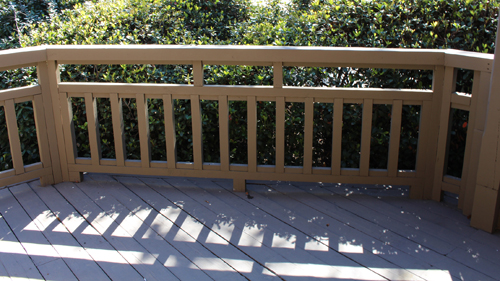
Rainwater splash back occurs when water drips directly off a roof line or roof eave and strikes a solid surface below, such as a deck, walkway, or porch. Upon impact, the water splashes upward, repeatedly coating the bottom few inches of the siding and the entry door. Over time, this constant wet-dry cycle breaks down the protective coating.
Snow accumulation presents an even greater threat. In areas with significant winter weather, snow builds up against the perimeter of the foundation and lower walls. Heat loss through the home's exterior walls causes the snow directly touching the building to melt slowly from the inside out. This creates a pocket of trapped, continuous moisture. When wood siding or doors sit immersed in this melting snow for days or weeks at a time, the wood fibers saturate, leading to finish failure, wood rot, and structural softening.
THE LIMITATIONS OF CLEAR COATINGS AND EXTERIOR STAINS
A common mistake is treating exterior wood with a standard penetrating stain followed by a clear topcoat like lacquer or polyurethane. While these finishes look exceptional initially, they lack the durability required for harsh, wet climates.
Stain is designed to soak into the wood pores rather than form a thick surface shield. When a clear film-forming topcoat like lacquer is applied over it, the finish remains relatively thin. Exposure to ultraviolet (UV) radiation and moisture causes the wood to expand and contract. This movement fractures the thin clear coat, allowing water to sneak underneath. Once moisture is trapped beneath a clear polyurethane or lacquer film, it turns the wood black, destroys the bond, and causes the finish to peel away in sheets.
WHY PAINT PROVIDES SUPERIOR EXTERIOR PROTECTION
For homes exposed to severe winter weather, paint is the universally recommended exterior coating. Unlike stain, paint creates a thick, opaque, and flexible protective barrier across the surface of the wood. Modern exterior paints, specifically high-quality acrylic latex formulas, are engineered to remain flexible. This flexibility allows the coating to stretch and contract along with the wood's natural movement during temperature and humidity swings.
Paint also contains higher concentrations of protective pigments and binders that shield the wood from UV degradation and repel standing water or splashback far more effectively than thin clear coats.
STRATEGIC HOME MAINTENANCE AND COMMUNITY INSIGHT
While installing seamless gutters can significantly mitigate rainwater splashback by capturing roof runoff, gutters alone cannot prevent snow from piling up against your walls. True home protection requires a multi-layered approach that combines proper water management, resilient coatings like paint, and regular maintenance.
When determining the best protection strategy for your specific microclimate, look to your local community. Observe neighboring homes that have weathered several winters without showing signs of exterior rot or peeling. Engaging with neighbors to ask about their specific maintenance routines, preferred paint brands, and contractor recommendations can provide valuable, geographically accurate solutions for keeping your home exterior pristine.
THREE KEY TIPS FOR PROTECTING EXTERIOR WOOD
CHOOSE HIGH-QUALITY EXTERIOR ACRYLIC LATEX PAINT
In high-moisture and heavy snow environments, avoid using film-forming clear coats like lacquer or polyurethane on exterior raw wood. Instead, apply a dedicated exterior wood primer followed by two coats of premium acrylic latex paint. Acrylic latex maintains its elasticity, allowing the paint film to breathe and flex without cracking as the wood adjusts to seasonal moisture changes.
MAINTAIN A VERTICAL CLEARANCE BELOW ROOF DRIP LINES
To prevent severe rainwater splashback onto your siding and doors, ensure that all roof runoff is directed away from wood structures. Install properly sized gutters and downspouts. If gutters are not feasible due to heavy snow-load damage risk, ensure the ground or deck surface below the drip line is sloped away from the house and that the lower siding has adequate clearance from the deck floor.
SHOVEL SNOW AWAY FROM SIDING AND ENTRYSWAYS
Do not allow snow banks to accumulate directly against the wood siding or doors of your home. After every significant snowfall, clear a path at least twelve inches wide around the perimeter of your home's foundation. This prevents the heat escaping from your home from melting the snow into trapped standing water against your exterior wood walls.
BONUS QUESTIONS AND ANSWERS
TRANSITION SENTENCE: Beyond selecting the right paint and managing snow removal, structural design and building codes play a critical role in preventing moisture damage to your home's exterior.
QUESTION 1: What is the minimum required code clearance between exterior wood siding and the ground or adjacent concrete surfaces?
ANSWER 1: According to Section R317.1 of the International Residential Code (IRC), specific clearances are mandated to protect non-preservative-treated wood from moisture ground-contact hazards. Framing members and sill plates must be a minimum of 8 inches above exposed earth. When dealing with wood siding or sheathing, the universally accepted best practice and code standard requires a minimum clearance of 6 inches from finished earth grade, and at least 2 inches of clearance above concrete surfaces like patios, walkways, or decks. This prevents the wood from wicking ground moisture and reduces the severity of water splash back.
QUESTION 2: Why do exterior entry doors require a flashing pan at the threshold, and what structural purpose does it serve?
ANSWER 2: Entryway thresholds are highly vulnerable to water penetration from rain splash back and wind-driven snow. The International Residential Code requires all exterior window and door openings to be flashed in a manner that prevents water from entering the wall cavity. A sill flashing pan is installed directly beneath the door threshold before the door frame is set. This pan features a rear upward lip that acts as a structural dam. If water bypasses the primary weather stripping or door seals, the pan catches the moisture and directs it outward onto the house wrap or flashing plane, protecting the subfloor and rim joist from catastrophic wood rot.
QUESTION 3: How does the installation of an exterior house wrap or weather-resistive barrier protect the home if the paint finish fails?
ANSWER 3: Under Section R703.2 of the IRC, a weather-resistive barrier (WRB), such as asphalt felt or a commercial house wrap, must be installed behind all exterior cladding. Paint and siding serve as the primary exterior water shedder, but they are not entirely waterproof. When snow sits against siding or paint cracks due to UV damage, water will inevitably bypass the wood layer. The WRB acts as a secondary drainage plane. It is vapor-permeable, meaning it allows moisture vapor from inside the house to escape, but it stops liquid water from touching the wood sheathing and framing studs, safely channeling the water down toward the foundation weep holes.