ADVANCED DRYWALL TEXTURING: IMPROVING VISIBILITY AND COVERAGE
Applying drywall texture evenly can be challenging, especially when spraying white texture material over bare drywall or white primer. Achieving a consistent, professional-grade pattern requires clear visibility during the application process. One highly effective technique utilized by finishing professionals is tinting the drywall texture mix.
THE CHALLENGE OF WHITE-ON-WHITE TEXTURING
When applying standard white drywall texture over a white surface, the lack of contrast makes it difficult to gauge the thickness and uniformity of the spray pattern. This often leads to heavy build-ups in some areas and sparse coverage in others. Inadequate lighting in a room under construction further exacerbates this issue, making it nearly impossible to see the wet texture as it hits the wall.
TINTING THE TEXTURE MIX FOR VISUAL FEEDBACK
To solve the visibility problem, a small amount of standard latex paint can be mixed directly into the drywall texture before spraying. For example, adding a distinct color, such as red latex paint, transforms the white texture into a contrasting shade. When sprayed onto the wall, the colored texture immediately stands out against the white background. This instant visual feedback allows the applicator to see exactly how much material is being applied, ensuring a uniform, flawless pattern across the entire surface.
OPTIMIZING PRIMER FOR THE FINAL TOPCOAT
Beyond tinting the texture itself, finishing professionals also optimize the primer layer. If the final wall color is already known, it is highly recommended to tint the primer to closely match the topcoat. For instance, if a room is going to be painted brown, applying a white primer will require multiple coats of the darker finish paint to achieve full hide. By taking your primer to a home improvement center and having it tinted to match the final latex paint color, you create an ideal base layer that significantly improves the coverage and richness of the final finish.
CONCLUSION
Proper preparation and visual control are the keys to a high-quality drywall finish. By utilizing tinted texture and color-matched primers, professionals save time on the job site, reduce material waste, and deliver a superior final product that is ready for a long-lasting paint application.
THREE KEY TIPS FOR DRYWALL TEXTURING
Tint your drywall texture mix with a distinct color of latex paint to create contrast, allowing you to clearly see your spray pattern and ensure even coverage across the wall.
If you already know the final color of the room, use a similar tint in your texture and primer to help the topcoat hide the underlying layers more efficiently.
Have your local home improvement center professionally tint your primer to match your final latex paint, which drastically reduces the number of finish coats required for dark or bold colors.
BUILDING SCIENCE AND DRYWALL FINISHING FAQS
To ensure your interior wall finishing meets professional standards beyond just aesthetic texturing, here are answers to common technical questions regarding drywall application and building science.
QUESTION: When does the building code require specialized drywall rather than standard wallboard?
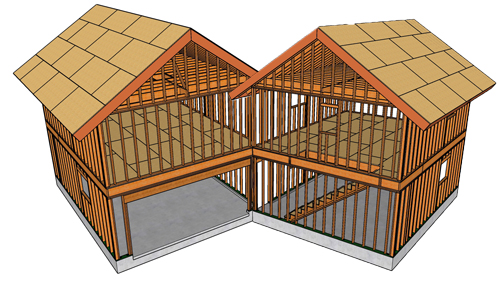
ANSWER: The International Residential Code (IRC) requires Type X, which is fire-rated drywall, in specific locations to slow the spread of fire and protect structural integrity. The most common residential application is the separation between an attached garage and the habitable living space. According to the IRC, a minimum of 1/2-inch gypsum board is required on the garage side of standard shared walls, while 5/8-inch Type X gypsum board is strictly mandatory for ceilings in garages that have habitable rooms above them. This ensures a necessary fire resistance rating to protect occupants from rapid fire spread.
QUESTION: How does the application of wall paint and primer impact a home's required vapor retarder system?
ANSWER: Managing moisture is a critical building science principle. In colder climate zones, the International Residential Code requires a Class I or II vapor retarder on the interior side of framed and insulated exterior walls to prevent winter condensation inside the wall cavity. While standard latex drywall paint and standard primer do not qualify, you can apply specialized vapor-retarding primer paint. When applied to the manufacturer's specified thickness, these specialized coatings can serve as a Class III vapor retarder, which is acceptable by code in certain wall assemblies when combined with specific types of continuous exterior insulation or vented claddings.