WHY YOU SHOULD NEVER INSTALL CARPET UNDER A WASHING MACHINE
Moisture control is a fundamental principle of residential building science. When setting up a laundry area, the choice of flooring beneath your appliances plays a critical role in preserving the structural integrity of your home.
One of the most detrimental installation mistakes is placing a washing machine directly on top of carpeting. Whether dealing with a concrete slab or a wood-framed subfloor, carpets and moisture-generating appliances are a dangerous combination that can lead to severe property damage.
THE MOISTURE TRAP AND BIOLOGICAL GROWTH
Carpeting acts as a highly effective sponge. When positioned under a washing machine, it will inevitably absorb water from micro-leaks, condensation, or general appliance maintenance. Because the area beneath a heavy appliance receives zero airflow, trapped water cannot evaporate.
This creates an ideal environment for biological growth. Within days, damp carpeting and its underlying pad will begin to foster mold, mildew, and fungi. Not only does this create foul odors and compromise indoor air quality, but it also initiates the rapid decay of the surrounding building materials.
STRUCTURAL THREATS TO WOOD-FRAMED FLOORS
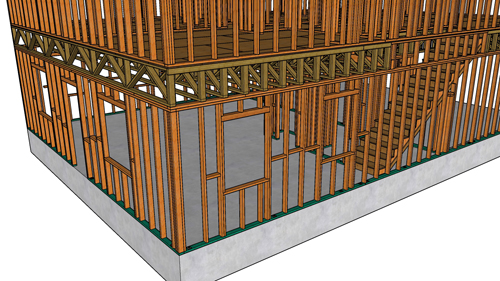
The stakes are significantly higher if your home features a wood-framed floor over a crawlspace, basement, or on a second story. While a minor, unnoticeable appliance leak might seem harmless, a carpet will hold that moisture directly against the wooden subfloor for extended periods. Chronic moisture exposure breaks down the cellular structure of oriented strand board, plywood, and solid wood joists. Over time, this constant dampness will cause the wood to rot, losing its load-bearing capacity and leading to extremely costly structural repairs.
CODE-COMPLIANT FLOORING ALTERNATIVES
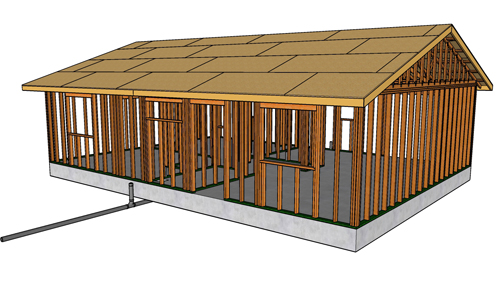
If your laundry appliances are situated on a solid concrete slab on grade, the simplest and most effective solution is to remove the carpeting entirely and set the machines directly on the bare concrete. Concrete can withstand incidental moisture without decomposing.
For wood-framed subfloors, non-porous flooring is essential. Removing the carpet and installing a waterproof barrier, such as sheet vinyl or luxury vinyl tile, provides a critical layer of protection. Vinyl materials will not absorb water, keeping incidental moisture on the surface where it can be seen and dried before it penetrates the wooden subfloor below.
APPLIANCE DRAIN PANS FOR LEAK MITIGATION
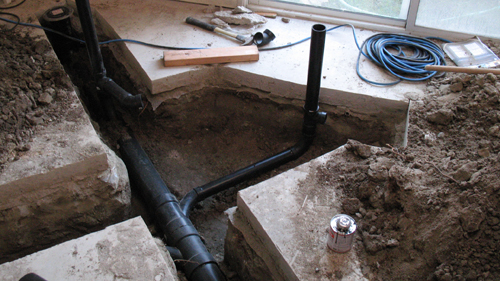
Regardless of the flooring type, utilizing a metal or heavy-duty plastic washing machine drain pan is an excellent defensive measure. These pans typically feature raised edges of one to one-and-a-half inches and sit directly beneath the appliance. If a hose fitting drips or the machine overflows, the water accumulates in the pan rather than soaking into the floor. In many installations, these pans can be plumbed directly into a floor drain, providing an automatic failsafe against catastrophic water damage.
THREE KEY TIPS
REMOVE ABSORBENT MATERIALS IMMEDIATELY: Never allow carpet, rug pads, or any porous materials to remain under a washing machine or dryer. Replace them with hard, non-absorbent surfaces like vinyl, tile, or sealed concrete to prevent hidden water retention.
UTILIZE A PROTECTIVE DRAIN PAN: Always install a watertight appliance drain pan beneath your washing machine. For maximum protection on wood-framed floors, ensure the pan features a drainage fitting connected to a dedicated waste line to safely divert overflow away from the structure.
MONITOR FOR SLOW LEAKS: Regularly inspect the flooring around the base of the washing machine. Early signs of trouble include a rusting drain pan, peeling vinyl seams, or a persistent musty odor, all of which indicate an active micro-leak that needs immediate plumbing attention.
BONUS QUESTIONS AND ANSWERS
To further safeguard your home against laundry room water damage, it is helpful to understand the building science that goes beyond your flooring choices.
ARE WASHING MACHINE DRAIN PANS REQUIRED BY BUILDING CODES?
While the International Residential Code strictly mandates drain pans and discharge pipes for traditional water heaters, it does not universally mandate them for washing machines in single-family slab-on-grade homes. However, building codes emphasize protecting the structural integrity of the home. Therefore, if the washing machine is located on an upper floor or over a finished space, local municipal codes heavily recommend or strictly require a drain pan connected to an approved drainage system. This ensures that a sudden appliance failure will not cause catastrophic decay to the floor joists or the drywall ceilings below.
DOES LAUNDRY ROOM VENTILATION IMPACT FLOORING AND STRUCTURAL HEALTH?
Yes, proper ventilation is critical for structural preservation. The International Residential Code requires that all clothes dryers exhaust directly to the exterior of the building. If a dryer vent is poorly sealed or exhausts into an interior space, it pumps immense amounts of warm, humid air into the room. This ambient humidity will condense on cooler surfaces, including the flooring behind the appliances. Over time, this condensation mimics a plumbing leak, leading to the same mold growth and subfloor rot that a leaking washing machine would cause.
WHAT TYPE OF WATER SUPPLY VALVES ARE BEST FOR PREVENTING LAUNDRY LEAKS?
Standard building codes require accessible shutoff valves for the hot and cold water supply lines connected to a washing machine. From a structural protection standpoint, the industry best practice is to install a single-lever ball valve. Traditional gate valves are prone to seizing or dripping over time, which can slowly saturate the surrounding drywall and flooring. A single-lever valve allows homeowners to easily and instantly cut off the water supply between laundry days, drastically reducing the risk of a burst hose flooding the floor structure while the house is unoccupied.