How Tree Roots Compromise Concrete Slabs And Foundations
The immense power of nature is often underestimated in residential construction, particularly when it comes to landscaping choices near structural concrete. A common question among property owners is whether tree roots possess the strength to lift heavy concrete flatwork. The reality is that large, maturing trees exert tremendous sub-surface pressure capable of displacing slabs, walkways, and even structural foundations.
When a tree is planted too close to a paved surface or building perimeter, its root system naturally expands outward and upward in search of oxygen and moisture. Over time, this expansive growth creates a hydraulic-like pressure beneath concrete installations. In severe cases, expanding root systems can heave solid concrete slabs upward by six inches or more. Even adjacent concrete pads that appear relatively unaffected may have already experienced subtle elevation changes due to the interconnected root network below.
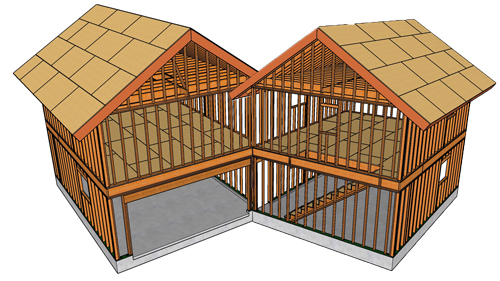
Beyond cosmetic damage to walkways and patios, the proximity of large trees poses a significant threat to permanent structural elements. If root systems extend beneath load-bearing perimeter footings or monolithic slab-on-grade foundations, they can induce differential settlement or heaving. For example, a large tree expanding near a garage corner can progressively lift the foundation, compromising the structural integrity of the wall framing and exterior weather-resistive barriers.
Strategic landscape planning and proactive site evaluation are critical for preserving the integrity of residential concrete. Understanding the subterranean behavior of large trees is the first step in preventing costly structural damage to driveways, patios, and foundations.
Three Key Tips
Inspect concrete flatwork near large trees regularly to identify early signs of heaving or cracking before the displacement worsens.
Monitor the structural corners of buildings, such as garages or additions, if large tree canopies extend near the roofline, as root systems often mirror the canopy width and can threaten perimeter footings.
Evaluate the elevation of adjacent concrete pads, as substantial root growth often lifts interconnected slabs uniformly, masking the true extent of the subterranean displacement.
Bonus Questions And Answers
To further expand on the relationship between tree roots and structural integrity, exploring the building science behind subterranean root behavior reveals exactly why these problems occur.
What Are The International Residential Code Requirements For Root Barriers Near Foundations?
The International Residential Code does not explicitly mandate a specific distance for planting trees or universally require root barriers, as soil types vary drastically by region. However, local jurisdictions frequently amend the building code to include specific setbacks for landscaping to protect foundations, especially in areas with expansive clay soils. From a structural engineering perspective, installing a rigid or chemical root barrier at the drip line of a tree is a universally accepted best practice to deflect root growth downward and away from shallow residential footings and exterior flatwork.
How Does Soil Compaction Affect Root Growth Under Concrete Slabs?
Tree roots generally follow the path of least resistance, seeking loose, oxygen-rich, and moist soil. During residential construction, the soil beneath concrete flatwork and foundations is heavily compacted to achieve specific structural load-bearing capacities. Unfortunately, the gravel base course installed directly beneath the concrete slab often traps moisture through capillary action and condensation. Roots naturally migrate toward this moisture-rich zone, exploiting the interface between the compacted subgrade and the gravel base, which ultimately leads to the roots wedging upward against the concrete.
Can You Safely Cut Tree Roots That Are Lifting A Structural Foundation?
Severing large structural roots to lower a heaving foundation is a highly complex procedure that requires consultation with both a structural engineer and a certified arborist. Cutting major roots can destabilize the tree canopy, creating a severe windthrow hazard that threatens the structure from above. Furthermore, removing a massive root system leaves a subterranean void that can lead to rapid soil subsidence and secondary foundation settlement. The preferred remediation often involves stabilizing the foundation via underpinning with helical piers or push piers to transfer the building load to deeper, undisturbed soil, rather than simply excavating and cutting the structural tree roots.