The Hidden Dangers Of Lifetime Exterior Coatings
Every homeowner dreams of a completely maintenance-free exterior. The promise of never having to paint a house again is a powerful selling point, especially when packaged with a limited lifetime warranty. Over the years, aggressive marketing campaigns have promoted thick, spray-on coatings as a permanent solution for stucco, wood siding, and exterior fascia boards. However, applying an impermeable shell over a residential structure fundamentally disrupts how a house manages internal and external moisture, often leading to severe structural consequences.
The Building Science Of Moisture Entrapment
Modern building science dictates that wall assemblies must be able to dry when they inevitably get wet. Traditional exterior cladding and wood components require a specific degree of vapor permeability to breathe. When a thick, plastic-like coating is applied over these surfaces, it creates an airtight and watertight seal. Any moisture that bypasses this layer through microscopic cracks around windows, failing roof lines, or internal condensation becomes permanently trapped behind the barrier. Unable to evaporate outward, this moisture saturates the wood substrate and creates a perfect breeding ground for accelerated decay.
Detecting Hidden Structural Decay
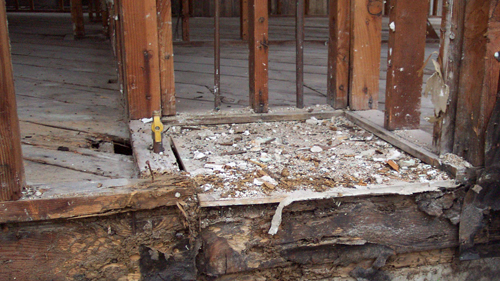
One of the most dangerous aspects of heavy elastomeric or plasticized exterior coatings is their structural rigidity. The coating itself is highly durable and maintains a solid outward appearance even as the materials beneath it fail. A home can look perfectly intact from the curb while the underlying siding and fascia boards have completely rotted away.
Often, structural damage is only discovered when routine maintenance allows a hand tool, like a screwdriver, to puncture easily through the hard outer shell into soft, spongy decay. Furthermore, saturated wood is a primary attractant for subterranean termites, compounding the destruction and leading to extensive pest damage.
The Reality Of Miracle Warranties
A lifetime warranty is only as reliable as the company backing it. Homeowners frequently fall victim to high-pressure sales tactics pushing miracle products that have only been on the market for a few years. True longevity in exterior building materials is proven over decades of real-world exposure, not short-term laboratory testing or sales brochures. When these exterior systems inevitably fail and trap moisture, the application companies have often gone out of business, leaving the homeowner with zero financial recourse. Remediating this type of failure is devastatingly expensive, often requiring the complete demolition and replacement of all exterior stucco, wood siding, and fascia.
Three Key Tips
Always verify the perm rating of any exterior house paint or coating before application to ensure the final product allows trapped water vapor to escape from the wall cavity safely.
Conduct annual physical inspections of your exterior trim and siding by pressing firmly on the material to identify hidden soft spots that might be concealed beneath a rigid layer of paint.
Never rely on surface coatings to replace standard mechanical waterproofing; no miracle paint can substitute for properly installed flashing behind siding or above window headers.
Understanding Historical Construction Product Failures In Roofing And Siding
The construction industry continually evolves by learning from past material science mistakes. Throughout the late twentieth century, several innovative building materials were introduced to the market with promises of high durability, lower costs, and easier installation. However, real-world weathering, moisture exposure, and thermal cycling revealed catastrophic flaws in several roofing and siding products. These failures led to massive class-action lawsuits and significant changes in the International Residential Code and International Building Code to protect future structural integrity.
The Downfall Of Organic Asphalt Shingles
Before fiberglass mats became the standard, organic asphalt shingles dominated the residential roofing market. These shingles were manufactured using a base mat made of recycled paper, wood pulp, and rags, which was saturated with asphalt and coated with ceramic granules. The structural reasoning behind their failure was fundamental moisture absorption. If the protective asphalt layer degraded from ultraviolet exposure, the cellulose core absorbed rainwater. This moisture absorption caused the shingle to experience several critical failures:
Premature curling and warping of the shingle edges
Blistering underneath the ceramic granule protective layer
Total loss of structural uplift resistance during high wind events
Under the modern International Residential Code, specifically section R905.2, asphalt shingles must now pass rigorous ASTM tests for tear strength and wind resistance, heavily favoring the dimensional stability of modern fiberglass mats which do not absorb moisture.
Hardboard And Composite Wood Siding Failures
In the nineteen eighties and nineties, manufacturers introduced composite wood siding, primarily engineered from oriented strand board and hardboard materials. These products were bound together with resins and covered with a paper face stamped with a faux wood grain. The structural failure of these siding products stemmed from inadequate edge sealing and poor moisture resistance. When exposed to prolonged rain or snow accumulation, the bottom edges of the boards absorbed water like a sponge. The structural wood fibers swelled, leading to delamination, severe rot, and mold within the wall cavity. Current building codes heavily mandate proper flashing, vapor retarders, and a minimum clearance of six inches from the siding to the finished grade to prevent this exact type of moisture wicking.
The Barrier Synthetic Stucco Crisis
Exterior Insulation and Finish Systems, commonly known as synthetic stucco, represented one of the most damaging product failures in residential construction history. Early barrier systems consisted of foam insulation boards glued directly to exterior sheathing, covered with a fiberglass mesh and a thin acrylic finish. The engineering flaw was the assumption that the exterior barrier would never leak. When water inevitably penetrated around windows, doors, or roof intersections, it became trapped behind the impermeable foam. Because the moisture could not dry outward, it aggressively rotted the structural wood framing beneath. As a direct result of these failures, modern building codes mandate that all synthetic stucco installations must be water-managed systems. This requires a dedicated water-resistive barrier applied to the sheathing and a physical drainage plane that allows intruding water to escape via weep screeds at the bottom of the wall assembly.
Bonus Questions And Answers
Question One What Caused Polybutylene Plumbing Pipes To Fail
While exterior envelope failures are highly visible, internal plumbing system failures can be just as devastating to a home. From the late nineteen seventies to the mid nineteen nineties, polybutylene piping was widely used as a cheaper alternative to copper. The failure occurred because the plastic reacted chemically with the chlorine and other water treatment oxidants present in standard municipal water supplies. Over a period of ten to fifteen years, this chemical reaction caused the pipe interior to flake, become brittle, and develop micro-fractures, inevitably leading to sudden, catastrophic blowouts behind drywall. Today, modern plumbing codes strictly regulate approved materials for water distribution, relying heavily on cross-linked polyethylene, which undergoes intense testing to ensure absolute resistance to chlorinated water environments.
Question Two Why Did Fire Retardant Treated Plywood Roof Sheathing Fail
Another significant failure occurred not on the exterior surface of the roof, but directly underneath it within the structural framing. In the nineteen eighties, heavily grouped townhomes used treated plywood for roof sheathing to prevent fire spread between units. However, the specific chemical formulations used to achieve fire resistance reacted disastrously when subjected to the high heat and humidity typical of poorly ventilated attics. The chemicals underwent acid hydrolysis, essentially eating the wood fibers and turning the structural plywood into a brittle, crumbling mess that could not support the weight of roofers or snow loads. The International Building Code now dictates that any fire-retardant-treated wood used in roofing must pass strict high-temperature strength degradation testing to ensure the wood retains its structural load-bearing capacity throughout its lifespan.
Question Three What Was The Structural Hazard Behind Aluminum Branch Wiring
Moving beyond structural and plumbing elements, electrical product choices from the past have also necessitated major industry shifts. During periods of high copper prices in the nineteen sixties and seventies, single-strand aluminum wiring was installed for standard residential branch circuits. The technical failure lies in the metallurgical properties of aluminum; it has a higher coefficient of thermal expansion than copper and oxidizes rapidly when exposed to air. This constant expanding and contracting during electrical use caused the connections at outlets and switches to become loose, while the oxidation created high electrical resistance. Together, these factors generated intense heat, leading to melted receptacles and widespread house fires. The modern National Electrical Code, integrated into residential building codes, prohibits standard aluminum wiring for small branch circuits, requiring copper wire or highly specialized aluminum alloys terminating in specific compatible devices.
Question Four Why Did Asbestos Cement Roofing And Siding Have To Be Discontinued
Sometimes, a product performs exceptionally well structurally but fails completely from a health and safety standpoint. Asbestos cement tiles and siding shingles were incredibly durable, completely fireproof, and highly resistant to rot and insects. The failure was biological rather than structural; as the cement matrix weathered or was cut during installation, it released microscopic asbestos fibers. When inhaled, these sharp, durable fibers embed deep in lung tissue, causing severe respiratory diseases. The Environmental Protection Agency and modern building codes essentially eliminated its use by mandating extreme safety protocols for any handling or removal. This industry shift spurred the invention and code approval of modern fiber cement siding, which utilizes safe cellulose fibers bound in Portland cement to achieve the exact same structural durability and fire resistance without the deadly health hazards.