5 YEAR CONCRETE GARDEN POND EVALUATION: STRUCTURAL INTEGRITY AND PERFORMANCE
Building a concrete backyard pond is a significant investment of time and resources, making long-term durability a top priority. Evaluating a concrete pond after five years of continuous use provides excellent insight into how structural materials, water pumps, and electrical systems weather the elements. Overall, a properly constructed concrete pond can maintain exceptional structural integrity over half a decade, but assessing the wear and tear offers vital lessons for future construction projects.
CONCRETE DURABILITY AND CRACK ANALYSIS
After five years, a well-poured concrete pond floor should remain highly intact without structural leaking. However, perimeter walls and decorative edges are highly susceptible to stress. In this evaluation, a few noticeable cracks appeared along the outer perimeter. One notable fissure developed relatively early in the pond's lifespan due to formwork constraints.
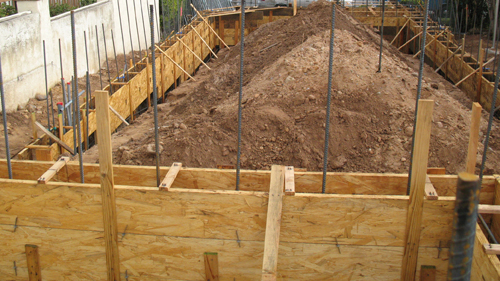
During the initial pour, a tight space behind the concrete form restricted the material flow, resulting in a wall thickness of only about 2 inches. In structural concrete applications, particularly those exposed to moisture and soil expansion, 2 inches is insufficient to withstand tensile stress without cracking. Insufficient thickness lacks the necessary mass and reinforcement cover to resist thermal expansion, contraction, and ground settling, which is why that specific section failed early on.
PUMP SELECTION AND WATER FEATURE MECHANICS
Moving water is the lifeblood of any garden pond, preventing stagnation and powering aesthetic features like waterfalls. Selecting the correct pump is critical for longevity. Standard sump pumps are designed for intermittent water removal, not continuous, 24/7 operation. Utilizing a sump pump in a permanent pond setting often leads to premature motor burnout. Conversely, specialized continuous-duty pond pumps are engineered specifically for uninterrupted circulation. Upgrading to a dedicated pond pump ensures years of reliable flow for waterfalls and filtration systems.
When planning water features, aesthetic considerations must be integrated into the initial structural design. For example, routing the black plastic tubing for a waterfall should be done before laying the final stonework. Adding rocks as an afterthought makes it difficult to adequately camouflage plumbing lines, leaving mechanical components visible against the natural stone.
ELECTRICAL SAFETY AND GFCI UPGRADES
Water and electricity are a hazardous combination, making electrical safety the most critical component of any pond build. Temporary solutions, such as running standard extension cords across the yard to power a water pump, pose severe safety and fire hazards and violate basic electrical building codes for permanent structures.
For long-term installations, power must be routed safely to a Ground-Fault Circuit Interrupter (GFCI) receptacle. A GFCI is designed to instantly cut power if it detects a ground fault, protecting users and wildlife from electric shock. In this installation, the electrical system was successfully upgraded by running dedicated wiring to a permanent GFCI outlet anchored near a shed, ensuring the pond operates safely year-round.
CONCLUSION
A five-year inspection reveals that while concrete is highly resilient, careful attention must be paid to formwork spacing to ensure adequate concrete thickness. Pairing a solid structural foundation with a continuous-duty pond pump and a code-compliant GFCI electrical system guarantees a beautiful, safe, and long-lasting backyard water feature.
THREE KEY TIPS
MAINTAIN ADEQUATE CONCRETE THICKNESS: Never pour concrete retaining walls or pond edges thinner than 4 to 6 inches. Thin spots, such as a 2-inch pour caused by tight formwork, lack the structural strength to resist ground movement and will inevitably crack.
INSTALL A DEDICATED CONTINUOUS-DUTY PUMP: Avoid using standard basement sump pumps for garden ponds. Always source a pump specifically manufactured for continuous aquatic use to prevent premature mechanical failure.
NEVER USE EXTENSION CORDS FOR PERMANENT POWER: Extension cords degrade rapidly in outdoor weather conditions. Always wire pond pumps to a permanent, hardwired GFCI electrical receptacle to ensure long-term safety and code compliance.
ADDITIONAL POND CONSTRUCTION Q AND A
While evaluating surface cracks and pump systems is helpful, it is equally important to understand the hidden structural mechanics of concrete construction.
QUESTION: Why is steel reinforcement necessary for a concrete pond?
ANSWER: Concrete has immense compressive strength but very low tensile strength, meaning it easily pulls apart and cracks under tension. The American Concrete Institute (ACI) standard practice requires embedding steel rebar or welded wire mesh within the concrete. This steel skeleton holds the structure together against the shifting weight of the soil, the hydrostatic pressure of the water, and the thermal expansion caused by freezing and thawing cycles.
Beyond structural stability, retaining water effectively over a long period requires specialized surface treatment.
QUESTION: Does a bare concrete pond need an additional waterproofing layer?
ANSWER: Yes, standard concrete is a porous material. While thick, high-PSI concrete can hold water, moisture will eventually seep into the microscopic capillaries of the material. Over time, this leaching can rust internal steel reinforcement and cause structural spalling. Best practices dictate coating the interior of the cured pond shell with a specialized masonry water proofer, hydraulic cement-based coating, or a polyurea/epoxy pond sealer to create a true, impermeable barrier.
Securing your pond's electrical components properly is just as vital as the water feature itself.
QUESTION: How far away should a GFCI receptacle be placed from the edge of the water?
ANSWER: According to the National Electrical Code (NEC) Article 680, which governs swimming pools, fountains, and similar installations, electrical receptacles must generally be located no closer than 6 feet from the inside wall of the water feature. This mandatory clearance ensures that anyone touching the water or standing at the water's edge cannot simultaneously reach the electrical outlet, severely reducing the risk of accidental electrocution.