Why Deck Fasteners Fail And How To Prevent It
A beautifully constructed wood deck can quickly become a safety hazard when nails and screws begin sticking up above the surface. These protruding fasteners create dangerous trip hazards and can make routine maintenance frustrating. Understanding the structural and environmental causes behind this common decking problem is the first step toward building a safer, longer-lasting outdoor space.
The Science Of Wood Expansion And Contraction
The most frequent cause of fastener popping is the natural expansion and contraction of natural wood decking materials. As lumber absorbs environmental moisture from rain and humidity, the cellular structure swells. When the weather shifts and the wood dries out, it shrinks. Over multiple seasons, this constant cycle of expanding and shrinking acts like a slow, repetitive prying force. A nail driven flush with the wood surface during construction is eventually left protruding as the surrounding wood fibers shrink away from the fastener head.
Uneven Shrinkage In Framing And Floor Joists
The decking boards you walk on are not the only components subject to movement. The substructure, including floor joists and load-bearing beams, also expands and contracts. Because lumber shrinks at varying rates based on grain pattern and density, adjacent joists may change size unevenly. If one joist shrinks slightly more than the one next to it, the deck board spanning across them loses uniform support. When foot traffic applies weight to these unsupported sections, the board flexes downward and springs back up, gradually working the nails or screws loose over time.
The Importance Of Crowning Deck Joists
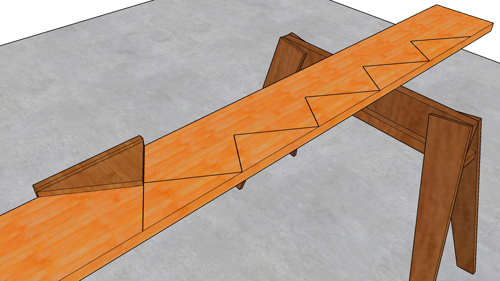
During the framing stage, proper lumber orientation is critical to a stable deck surface. Most sawn lumber has a natural bow or curvature along its edge, known as a crown. A fundamental rule of carpentry is to install all joists with the crown facing upward. If joists are installed inconsistently, with some crowns facing up and others facing down, the resulting deck surface will be highly uneven. This structural inconsistency forces the decking boards into unnatural tension, adding immense stress to the fasteners and accelerating the rate at which they pull loose under foot traffic.
Evaluating Screws Versus Nails For Decking
While modern deck construction heavily favors screws over nails, screws are not entirely immune to backing out. Threaded fasteners are far superior at holding materials down tightly, but severe lumber shrinkage can still expose screw heads. Additionally, the holding power of any fastener relies heavily on the density of the underlying joist material. Harder framing lumber, such as Douglas Fir, provides a much stronger bite for screw threads than softer materials like Redwood or Cedar. Utilizing the correct combination of heavy-duty deck screws and dense framing lumber significantly reduces the likelihood of fasteners loosening over the lifespan of the deck.
Three Essential Tips For Stable Deck Fasteners
Always evaluate framing lumber for its crown before installation. Sighting down the edge of the board and installing all joists with the highest point of the curve facing upward prevents undulating surfaces that pry fasteners loose.
Anticipate natural lumber movement by utilizing high-quality, heavily threaded screws rather than smooth-shank nails, as threads provide necessary resistance against the cyclical lifting forces of wet and dry wood.
Match your fastener strategy to your framing material density. If utilizing softer species like Cedar or Redwood for structural joists, utilize longer fasteners to ensure adequate penetration and holding power against foot traffic vibration.
Frequently Asked Questions About Deck Construction
Why Is Corrosion Resistance Required For Deck Fasteners?
While understanding wood movement is crucial, selecting the correct material for your fasteners is equally important for long-term safety. The International Residential Code mandates that all deck fasteners must be hot-dipped galvanized, stainless steel, or specifically approved for exterior use. Standard steel fasteners will rust rapidly when exposed to outdoor moisture and the heavy copper-based chemicals found in modern pressure-treated lumber, which inevitably leads to structural failure and deck collapse.
How Many Fasteners Are Required Per Deck Board?
Once you have the right corrosion-resistant hardware, knowing exactly how many to use per joist intersection prevents future warping. According to standard building practices and manufacturer guidelines supporting structural code requirements, conventional wood decking boards must be fastened with at least two screws or nails at every single joist location. This dual-fastening method secures the board across its width, preventing it from cupping, twisting, or prying fasteners loose as it undergoes natural wet and dry cycles.
Can I Hammer Popped Deck Nails Back Into Place?
If you already have a deck with popping nails, you might be wondering about the best permanent maintenance solution. Simply hammering popped nails back into the same hole is not a lasting fix because the wood fibers holding the fastener have already been stretched and permanently compromised. The universally accepted best practice is to remove the loose nail entirely and replace it with a slightly longer, aggressively threaded deck screw that can bite into fresh wood deeper inside the joist, ensuring a secure and permanent hold.