Understanding And Repairing Concrete Deterioration In Coastal Environments
Concrete is renowned for its durability, but specific environmental conditions can compromise its structural integrity. Coastal regions, characterized by constant moisture and salt-laden air, are particularly harsh on poured concrete walls. Recognizing the signs of deterioration and understanding the underlying causes is critical for proper building maintenance and longevity.
The Role Of Ground Moisture And Vapor Barriers
A common cause of concrete degradation at the foundation level is the capillary action of ground moisture. When water is absorbed from the soil into a continuous poured concrete wall, it must eventually evaporate. However, applying an impermeable coating, such as standard exterior paint, to the surface can trap this moisture inside the concrete matrix. Without a path for vapor diffusion, the accumulated moisture slowly breaks down the concrete from within. While paint is not the sole cause of the damage, it heavily exacerbates the deterioration process by preventing natural drying.
Structural Assessment And Steel Reinforcement
When inspecting degraded concrete, a critical component to evaluate is the internal steel reinforcement. In many cases of severe moisture intrusion, water reacts with the embedded rebar, causing it to rust and expand. This expansion leads to spalling, where the concrete surface physically breaks away. Interestingly, in certain instances of moisture-driven degradation, the rebar may remain unaffected while the surrounding concrete crumbles. This requires careful evaluation to ensure the structural load capacity remains intact before proceeding with cosmetic or structural repairs.
Proper Repair Methodology For Degraded Concrete
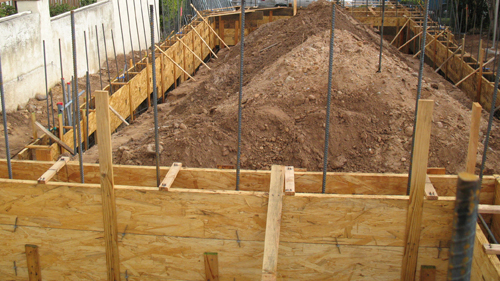
Surface-level patching is insufficient for structural deterioration. The correct method for repairing a heavily damaged poured concrete wall involves full material replacement. This requires chipping out and completely removing the compromised section of concrete to expose solid, sound material. Once the damaged section is removed, steel dowels must be epoxied into the existing concrete to securely tie the old structure to the new pour. Finally, the section is reformed and repoured using an appropriate high-strength concrete mix designed for the specific environmental exposure.
Three Key Tips
Essential Construction Tips For Concrete Maintenance
Avoid applying impermeable paints or non-breathable sealers to exterior concrete walls that lack an underlying vapor barrier, as this traps ground moisture and accelerates structural decay.
Always inspect the internal steel reinforcement when diagnosing concrete damage. If rebar rusts, it expands and causes spalling, meaning the steel must be cleaned and treated before any structural patching can occur.
When repairing a structurally compromised section of a poured wall, always mechanically remove the damaged material and dowel new steel rebar into the sound concrete to ensure structural continuity before repouring.
Bonus Questions And Answers
Frequently Asked Questions About Concrete Integrity
Beyond the basics of moisture entrapment and concrete repouring, building owners often encounter additional challenges when managing concrete structures. Here are a few related questions regarding concrete maintenance and building standards.
What Is The Minimum Required Concrete Cover For Steel Reinforcement In Coastal Environments?
According to the American Concrete Institute and standard building codes, concrete exposed to earth or weather requires a minimum of two inches of concrete cover over the steel reinforcement. In highly corrosive coastal environments, this is often increased to three inches or supplemented with epoxy-coated rebar to prevent salt and moisture from reaching the steel, which causes rust-induced spalling.
How Does A Capillary Break Prevent Moisture Migration In Concrete Walls?
A capillary break disrupts the upward movement of water through the porous structure of concrete. The International Building Code requires damp-proofing or waterproofing on foundation walls that retain earth. Placing a physical vapor barrier, such as a thick polyethylene sheet, under the concrete footing or applying a specialized damp-proofing coating stops ground moisture from wicking upward into the wall system.
Can Crystalline Waterproofing Admixtures Stop Existing Concrete Degradation?
While crystalline waterproofing admixtures are highly effective when added to fresh concrete during the initial pour, they cannot restore structural integrity to concrete that has already deteriorated. These admixtures work by reacting with moisture and un-hydrated cement particles to form insoluble crystals that block concrete pores. For existing damaged walls, structural repairs must be completed first, followed by the application of surface-applied crystalline treatments to mitigate future moisture penetration.