The Hidden Dangers Of Top Sealing Concrete Slabs
During interior flooring renovations, contractors frequently uncover a layer of concrete sealer or paint applied directly over the surface of a foundation slab. This is typically discovered when removing old carpeting and padding. While homeowners often assume that painting a waterproofing membrane on top of an interior floor will prevent ground moisture from ruining their flooring, this approach is fundamentally flawed from a building science perspective. Applying an impermeable sealer to the top of a concrete slab without addressing the source of the water creates a vapor trap that can lead to severe structural degradation.
Why Trapped Moisture Degrades Concrete
Concrete is an incredibly porous material that behaves much like a hard sponge. When groundwater surrounds a foundation, it travels upward through the concrete matrix via capillary action and vapor drive. If the top surface of the floor is covered by an impermeable paint or sealer, that upward-moving moisture hits a dead end.
Instead of evaporating into the interior air space, the water becomes permanently trapped inside the concrete. Over time, this trapped moisture can cause the topical sealer to blister and peel. Worse, persistent saturation can weaken the structural integrity of the concrete itself, potentially leading to spalling, efflorescence buildup, and eventually necessitating costly foundation replacements.
Proper Protocol For Slab Cracks
When inspecting an exposed foundation slab, finding surface cracks is common. However, trying to bridge or hide these cracks with a broad application of concrete sealer is the wrong approach. The correct method for addressing minor slab cracking is to treat the fissures directly. Clean the cracks thoroughly and fill them with a high-quality, elastomeric concrete caulk. An elastomeric sealant is crucial because it remains flexible after curing. This flexibility allows the material to expand and contract with the natural thermal movement of the foundation, ensuring a durable, watertight seal without trapping broad surface moisture.
Exterior Water Management Best Practices
The most effective way to manage interior foundation moisture is to stop water from reaching the slab in the first place. Rather than relying on interior surface coatings, property owners must implement comprehensive exterior drainage strategies. Installing appropriate area drains, ensuring roof gutters are clear and functional, and extending downspouts are critical steps. By diverting stormwater away from the perimeter of the building, you significantly reduce the hydrostatic pressure against the foundation walls and footing.
The Correct Approach To Concrete Vapor Barriers
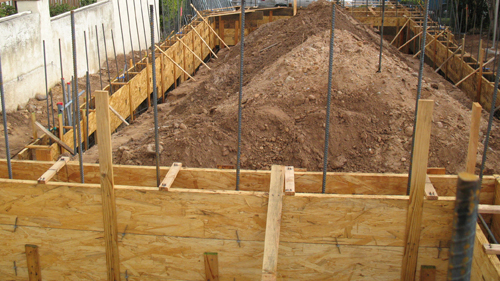
Modern construction standards dictate that foundation sealing must occur before the concrete is even poured. To properly protect a building from soil moisture, the vapor barrier must be positioned beneath the foundation, not painted on top of it. A sub-slab vapor retarder prevents ground moisture from entering the porous concrete matrix altogether. If you are dealing with an existing structure lacking a sub-slab barrier, focusing on exterior water diversion and utilizing breathable interior finishes will always yield better, safer results than attempting to seal the floor from above.
Three Key Tips
Never rely on topical interior sealers to fix moisture problems. Coating the top of a slab traps ground moisture inside the concrete matrix, which can cause the sealer to fail and potentially degrade the foundation over time.
Repair individual slab cracks with flexible sealants. Instead of painting over the entire floor, clean out any visible cracks and fill them with an elastomeric concrete caulk that can expand and contract with the building.
Manage moisture at the exterior source. The best defense against foundation water intrusion is to install proper roof gutters, extend downspouts, and utilize area drains to physically move surface water away from the structure.
Frequently Asked Questions About Foundation Moisture
While addressing interior floor sealers and exterior drainage covers the most common moisture management issues, property owners frequently have additional questions about foundation science and building codes. Below are some structural inquiries regarding concrete moisture control to further your understanding of the topic.
What Is The Building Code Requirement For Sub Slab Vapor Barriers?
The International Residential Code explicitly requires a vapor retarder to be installed beneath concrete slabs that serve habitable spaces. According to the IRC, a minimum six mil polyethylene sheet or an approved equivalent must be placed directly over the base course or subgrade before the concrete is poured. The joints of this vapor barrier must overlap by at least six inches and be sealed. This code exists specifically to prevent the capillary action of soil moisture from wicking upward into the interior living environment, which eliminates the need for problematic top-coat sealers.
How Does Exterior Soil Grading Affect Foundation Moisture Levels?
Proper exterior grading is a mandatory structural requirement for moisture control. Building codes dictate that the ground immediately surrounding a foundation must slope away from the building to prevent surface water from pooling against the concrete. The universally accepted standard, outlined in the International Residential Code, requires a minimum fall of six inches within the first ten feet away from the foundation walls. Where physical lot lines or retaining walls prevent this ten foot slope, alternative drainage methods like swales or subsurface drains must be installed to ensure water is aggressively routed away from the structure.
Can Hydrostatic Pressure Push Water Through Solid Concrete?
Yes, hydrostatic pressure is a powerful force that can push groundwater directly through an otherwise solid, uncracked concrete slab. When the soil beneath and around a foundation becomes saturated, the resting weight of that water exerts physical pressure against the concrete. Because concrete is naturally porous and filled with microscopic capillary networks, this pressure easily forces liquid water and water vapor upward through the slab. This is why topical interior sealers inevitably fail and blister. The hydraulic pressure from below is simply too strong for a thin surface coating to hold back.