Understanding The Structural Causes Of Squeaky Floors
At its core, a squeaking floor is a symptom of physical movement within the floor assembly. When structural components shift under the weight of foot traffic, building materials inevitably rub against one another. Whether it is two pieces of wood causing friction, or wood grinding against metal fasteners and hardware, identifying the exact point of movement is the first step toward a permanently quiet floor.
Dimensional Lumber Shrinkage And Fastener Friction
One of the most common catalysts for floor noise is the natural shrinkage of conventional framing lumber. As dimensional lumber dries, it loses moisture and contracts across the grain. It is not uncommon for a two-by-twelve floor joist to lose up to three-eighths of an inch in depth during its initial drying period. When this shrinkage occurs, the joist drops away from the subfloor sheathing above it. As a person walks across the floor, the plywood or oriented strand board deflects downward into that newly created gap, rubbing aggressively against the shank of the nails used to secure it. This friction is responsible for a vast majority of squeaking subfloors.
Improper Joist Hanger Fastening And Hardware Movement
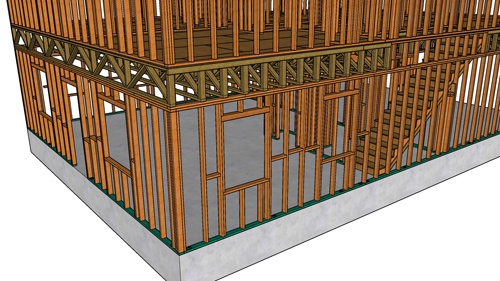
Floor systems that rely on metal joist hangers are highly susceptible to noise if they are not fastened to structural building codes. Joist hangers require specific nails placed in every single manufacturer-punched hole to securely bind the joist to the carrying beam. If these nails are omitted, or if the joist shrinks faster than the carrying beam, the joist can lift inside the hanger. Consequently, stepping on the floor pushes the joist back down into the metal cradle, creating a distinct metallic squeak. Simply adding fasteners to the subfloor above will not cure a squeak originating from a poorly secured joist hanger below.
Subfloor Deflection And Over-Spanned Joists
Movement can also occur strictly between the sheets of the subflooring. This often points to joists that are over-spanned or spaced too far apart, such as twenty-four inches on center with a sheathing thickness meant for sixteen-inch spacing. When stepping between these widely spaced joists, the subfloor bends under the load. As one sheet of plywood dips below the adjacent sheet, the edges grind together. Similarly, mid-span blocking installed between joists to add rigidity can dry out and shrink, creating yet another intersection where loose wood can shift and generate noise.
Misaligned Fasteners And Seasonal Expansion
During the initial construction phase, a carpenter driving nails through the subfloor into the framing might slightly miss the underlying joist. These exposed nails run parallel to the framing and can squeak loudly as the subfloor flexes up and down against the wood grain. Furthermore, regional climate variations play a massive role in wood movement.
High summer humidity causes lumber to absorb moisture and swell, while winter heating causes it to dry and contract. This seasonal expansion and contraction can create cyclical squeaks that appear and disappear throughout the year depending on the interior moisture levels of the home.
Three Key Construction Tips For Squeaky Floors
Locate and isolate shiners. Inspect the floor assembly from below, if accessible, to find any nails that missed the floor joists during installation. These misaligned nails should be removed or driven entirely flat to prevent the subfloor from grinding against them during deflection.
Fill all joist hanger holes. Inspect all metal framing connectors holding the floor joists. Ensure that every designated hole in the metal hanger is filled with the correct size and gauge of structural nail required by the manufacturer, which stops the joist from riding up and down under a live load.
Secure loose subfloors with threaded fasteners. When securing subflooring that has lifted away from a shrunken joist, bypass nails and use appropriate wood screws. The threads of a screw pull the sheathing tight against the framing and prevent the upward movement that causes friction.
Bonus Questions And Answers
Why Do Modern Builders Use Subfloor Adhesive To Prevent Squeaks?
While identifying existing movement is crucial for repairs, modern building practices take a preventative approach by utilizing specialized subfloor adhesives. Applying a continuous bead of heavy-duty polyurethane or solvent-based construction adhesive along the top of the joists prior to laying the sheathing is required by the engineered guidelines of the APA Glued Floor System. This adhesive chemically bonds the subfloor to the joists, creating a unified structural component that drastically reduces the potential for movement, nail-pops, and long-term squeaking.
Are Screws Better Than Nails For Securing Floor Sheathing?
When addressing a subfloor that has separated from the framing, the choice of fastener is highly important for a lasting repair. Smooth-shank nails have excellent shear strength, but they rely entirely on the friction of the surrounding wood fibers to stay in place, making them prone to pulling out as lumber flexes. Screws, conversely, offer superior withdrawal resistance. Building codes often accept appropriately sized structural screws because their threading mechanically locks the subfloor down to the joist, permanently eliminating the vertical travel that leads to squeaks.
How Do Engineered Joists Compare To Traditional Lumber For Floor Noise?
If you are dealing with persistent shrinkage issues in older framing, you might wonder how newer materials perform under similar conditions. Engineered lumber, such as I-joists or laminated veneer lumber, is manufactured in highly controlled factory environments with a very low moisture content. Because they are already dry and dimensionally stable upon installation, engineered joists experience virtually none of the cross-grain shrinkage that plagues traditional solid sawn lumber, significantly reducing the likelihood of gap-related floor squeaks.