Essential Maintenance Strategies For Exterior Wood Structures
Preserving the exterior wood on a property requires vigilance and proactive maintenance. Features such as fascia boards, exposed structural beams, and patio covers are constantly subjected to harsh environmental conditions. When left unmaintained, timber is highly susceptible to water intrusion, leading to severe structural decay. Understanding how to manage and protect these materials is critical for any property owner looking to maximize the lifespan of their investment.
Identifying And Sealing Wood Cracks
The most immediate threat to exterior lumber is the development of surface cracks. When wood expands and contracts due to temperature fluctuations and sun exposure, fissures inevitably form. During periods of heavy or prolonged rainfall, these cracks act as channels, drawing moisture deep into the cellular structure of the timber. Ignoring this degradation allows the cracks to widen, exponentially increasing the rate of water absorption. Property owners must routinely inspect exterior wood and address these vulnerabilities before moisture infiltration compromises the load-bearing capacity of the material.
Proper Application Of Fillers And Coatings
To effectively halt the progression of weather damage, larger structural cracks must be entirely filled with an exterior-grade caulking or specialized wood filler. For minor hairline fractures, a heavy application of premium exterior paint can sometimes bridge the gap.
However, visual confirmation is mandatory; if the crack remains visible after the paint dries, it remains a pathway for water and requires mechanical filling prior to recoating. High-quality exterior paint generally provides a stronger protective barrier against moisture than standard wood stains. If stain is the preferred aesthetic choice, it must be applied generously enough to soak deeply into the fibers and crevices, requiring significantly more frequent reapplication.
Addressing Structural Decay And Fastener Failure
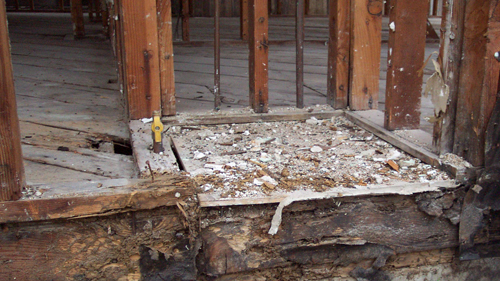
As wood weathers, corner joints and structural connections can warp and separate. These gaps must be pulled back together and mechanically fastened using heavy-duty exterior screws or nails prior to sealing. Unfortunately, preventative maintenance cannot reverse active decay. If a structural beam or fascia board is spongy, heavily rotted, or crumbling to the touch, sealants are no longer effective.
The compromised lumber must be completely removed and replaced to restore the safety and integrity of the building envelope. Additionally, property owners must ensure that the unexposed upper surfaces of beams and patio covers receive the same rigorous paint application as the visible sides, as neglected top surfaces are a primary starting point for catastrophic wood rot.
Three Key Maintenance Tips
Fill all large gaps and structural fissures with a high-quality exterior caulking or wood filler prior to painting to effectively block water intrusion.
Inspect and heavily coat the unexposed upper surfaces of horizontal exterior beams, as these areas bear the brunt of sunlight and standing water but are frequently missed during routine painting.
Mechanically secure separating joints and warped corners with appropriate exterior fasteners to restore structural rigidity before applying weatherproofing sealants.
Advanced Structural Protection And Code Compliance
While the maintenance strategies discussed above cover surface preservation, property owners frequently have deeper questions regarding standard building practices and long-term structural longevity.
How Does Proper Flashing Prevent Fascia And Ledger Board Rot?
To further expand on exterior wood longevity, it is crucial to understand the role of structural flashing. According to standard residential building codes, approved corrosion-resistant flashing must be installed continuously above all projecting wood trim, fascia, and ledger boards. Flashing physically diverts bulk water away from vulnerable horizontal wood surfaces and the structural envelope, preventing the localized water pooling that leads to rapid fungal decay. Without proper metal flashing, even heavily painted wood will eventually fail due to continuous water exposure.
What Types Of Wood Are Required For Uncovered Exterior Applications?
Beyond surface maintenance, the initial material selection plays a critical role in structural survival. Building codes mandate that structural wood members exposed directly to weather without adequate roof protection must be naturally durable wood species, such as specific grades of redwood or cedar, or approved preservative-treated lumber. This standard ensures that even if protective surface coatings like paint or stain eventually fail from neglect, the chemical or natural properties of the timber will inherently resist wood-destroying insects and fungal rot.