The Importance Of Air Gaps In Gutter Downspout Drainage
Properly managing roof runoff is a critical component of preserving a building's structural integrity and exterior finishes. While it may seem logical to connect a gutter downspout directly into an underground drain pipe for a seamless look, this direct connection can create severe, compounding problems for a home.
The Hidden Danger Of Direct Downspout Connections
When a downspout is sealed directly to an underground drainage system, the entire pathway relies on unrestricted flow. Underground pipes are highly susceptible to clogging from leaves, sediment, and roofing debris. If a blockage occurs in a direct-connection system, the water has nowhere to escape. The trapped water will fill the entire length of the downspout and eventually back up all the way to the roofline, causing the gutters to overflow and potentially damaging the roof fascia, soffits, and underlying framing.
How Localized Flooding Leads To Stucco Damage
A secondary and equally destructive issue occurs at ground level. If the underground drain fails, the massive volume of water collected from the roof is concentrated in one single area at the base of the home. Without a gutter system, rainfall disperses relatively evenly around the perimeter of the building. However, a failing underground drain acts as a funnel, saturating the soil heavily in one localized zone.
If water pools against the foundation for extended periods, it threatens the exterior siding. Stucco, for example, is highly porous. Through capillary action, stucco will wick moisture out of the saturated ground and draw it upward into the wall assembly. In severe cases, stucco can wick water up to three feet above the soil line. This chronic moisture exposure leads to blistering, cracking, and ultimately the failure of the stucco system.
The Air Gap Solution
The most effective way to prevent these compounding issues is to introduce a physical air gap between the end of the downspout and the intake of the underground drain. This separation acts as a fail-safe. If the underground pipe ever becomes clogged, the roof runoff will spill out onto the ground at the air gap rather than backing up into the gutters. While this may temporarily result in water pooling near the foundation, it prevents the catastrophic failure of the entire gutter system and immediately alerts the homeowner to the underground blockage so it can be cleared.
Three Key Tips For Downspout Drainage
Always maintain a physical air gap or install a specialized overflow grate between the vertical downspout and the underground drainage pipe.
Routinely inspect the exterior walls near your downspouts for signs of water stains, bubbling paint, or deteriorating stucco, which indicate poor drainage.
Clear your gutters and underground drain pipes of leaves and debris regularly to prevent blockages from forming in the first place.
Frequently Asked Questions About Residential Drainage
To further expand on best practices for managing residential roof runoff, here are answers to some commonly asked questions regarding building standards and drainage.
How Far Should A Downspout Discharge Water Away From The Foundation
According to general principles derived from the International Residential Code regarding surface drainage, moisture must be diverted away from the foundation walls to prevent structural settlement and moisture intrusion. While the exact required distance can vary by local jurisdiction based on specific soil types, the universal best practice is to discharge roof runoff a minimum of five feet away from the foundation. The ground itself should also be graded to fall away from the house at a minimum slope of six inches within the first ten feet.
Are Downspout Cleanouts Required By Building Codes For Underground Drains
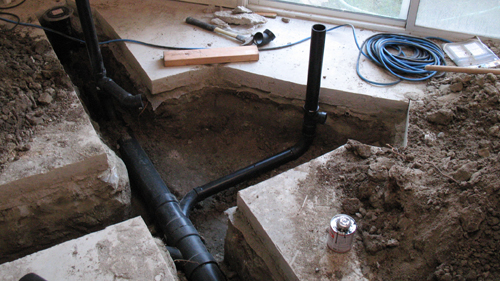
While the International Residential Code does not always explicitly mandate cleanouts for simple, standalone residential yard drainage systems in every region, installing them is a universally recognized plumbing and construction best practice. Any underground piping system that routes stormwater should feature a cleanout access point at the foundation connection and at any major changes in direction. This ensures that homeowners or professionals can clear blockages without having to excavate the entire yard.
What Type Of Pipe Is Best For Underground Downspout Extensions
When routing water away from a house, it is imperative to use solid pipe rather than perforated pipe near the foundation. Solid PVC or solid corrugated high-density polyethylene ensures that the concentrated roof runoff is safely transported away from the building. Using perforated pipe too close to the house will allow water to continuously seep directly into the soil resting against the foundation walls, completely counteracting the purpose of the drainage system and increasing the risk of foundation degradation.