Exterior stairways are constantly subjected to the harshest elements, making proper material selection and moisture management critical for structural integrity. Often, premature failure of outdoor steps is not caused by intense storms, but by localized, prolonged moisture exposure. A common culprit is misplaced landscaping irrigation, which can systematically destroy wood and engineered lumber components over time.
The Vulnerability Of Engineered Lumber
When building or repairing outdoor stairs, the choice of materials dictates the lifespan of the structure. Engineered lumber, such as oriented strand board and standard plywood, is highly susceptible to moisture degradation if left exposed. While there are exterior grades of plywood designed to resist delamination better than interior grades, continuous saturation will inevitably lead to structural failure. Premium options like marine grade plywood offer superior water resistance due to waterproof glues and void-free core layers, but even these specialized materials require proper sealing and maintenance to survive constant outdoor exposure.
Identifying Structural Decay And Fungal Growth
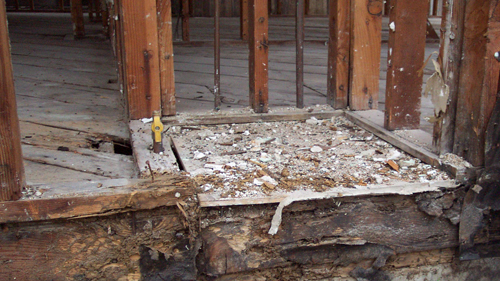
Continuous exposure to water creates an ideal environment for biological decay. When wood stays damp, it becomes a breeding ground for various types of fungi. White fungal growth and black mold are clear indicators that the wood fibers are actively decomposing. This rot severely compromises the load-bearing capacity of the stair treads and stringers. By the time these visual clues appear on the surface, the internal structure of the wood is often already destroyed, necessitating a complete replacement rather than a simple cosmetic repair.
The Importance Of Proper Foundation Support
Beyond the degradation of the wood itself, excess moisture can undermine the foundation of the stairway. Exterior stairs must be properly secured to a solid concrete footing. If a stairway is merely resting on a small concrete pad without proper mechanical anchorage, ground shifts or base deterioration can cause the entire assembly to slip off its footing. This creates a severe tripping and collapse hazard. Keeping irrigation systems directed away from the base of the stairs helps maintain the stability of the soil and the integrity of the structural connection.
Three Key Construction Tips
Select appropriate exterior materials instead of untreated engineered panels. For long-lasting structural integrity, utilize naturally durable wood species or pressure-treated lumber for all exterior stair components.
Control landscaping irrigation to ensure sprinkler heads never spray directly onto wooden structures, stair treads, or stringer bases.
Securely anchor stair stringers to concrete footings using approved galvanized or stainless steel structural post bases to prevent lateral movement and shifting.
Bonus Questions And Answers
Question: What Type Of Wood Is Required By Building Codes For Exterior Stair Treads
Answer: Moving beyond basic water prevention, you might wonder about the legal requirements for stair materials. The International Residential Code mandates that all structural wood components exposed to outdoor weather must be either naturally durable wood, such as cedar or redwood, or approved preservative-treated lumber. Standard untreated oriented strand board and regular plywood do not meet these requirements for direct weather exposure, as they lack the chemical resistance to withstand rot and decay.
Question: How Should An Exterior Stairway Be Attached To A Concrete Footing
Answer: Proper material selection is only part of the equation; structural stability is equally vital to stair safety. Building codes require that exterior stairs be positively anchored to their primary structure and base footing. Stair stringers cannot simply rest on a concrete pad or the ground. They must be attached using approved structural brackets and concrete anchors designed to resist both uplift and lateral displacement, ensuring the stairs remain stationary under heavy loads.
Question: Does Painting Oriented Strand Board Make It Suitable For Exterior Stairs
Answer: Many property owners attempt to cut costs by simply painting cheaper materials, leading to common questions about acceptable moisture barriers. Applying exterior paint to standard oriented strand board does not make it code-compliant or structurally safe for exterior stair treads. Paint is a surface coating, not a waterproofing membrane. Under continuous foot traffic and weather exposure, the paint film will eventually wear away, allowing standing water to penetrate the board edges and causing rapid swelling and structural failure.