The Critical Importance Of Immediate Stair Repairs
When a staircase sustains structural damage, delaying repairs is a gamble that property owners cannot afford to take. Stairs are high-traffic zones where even minor defects can rapidly escalate into severe safety hazards. Addressing isolated issues, such as a deteriorating bottom tread or a compromised stringer, is an essential maintenance task that ensures the safety of all visitors and occupants.
Understanding The Cost Of Delayed Maintenance
A common misconception in property management is that minor stair wear can be deferred. However, a targeted repair involving a single damaged tread and its supporting stringer is typically a modest financial investment. By completing this preventative maintenance early, property owners bypass the need for a complete staircase overhaul.
More importantly, this proactive approach acts as a vital shield against devastating financial liabilities. The relatively small cost of replacing a broken board pales in comparison to the medical expenses and legal repercussions that arise when a visitor trips and sustains a severe injury.
Addressing High Traffic Public Spaces
The urgency of structural repairs is magnified in public and commercial environments, such as community centers or religious institutions. These locations experience heavy daily foot traffic, exponentially increasing the probability of an accident if hazards are left unchecked. In these settings, financial concerns must take a back seat to human safety. A staircase with a failing tread is an immediate danger to the public.
Committing To Comprehensive Safety
If structural assessments reveal that the damage extends beyond an isolated step, decisive action is required. Patching a fundamentally flawed system is never a viable long-term strategy. When a staircase exhibits widespread deterioration, property owners must commit to completely replacing the unit. Protecting the health and safety of the community must always remain the foundational priority in any building maintenance program.
Three Key Tips
Target structural repairs immediately, focusing on load-bearing components like stringers and treads before worrying about cosmetic upgrades like fresh paint.
Isolate and resolve bottom-stair damage as soon as it appears, as the lowest steps often endure the highest impact forces and are prime tripping hazards.
Perform a holistic inspection of the staircase when local damage is discovered; if the supporting framework is compromised, prioritize a full replacement over a temporary patch.
Bonus Questions And Answers
To further understand the technical requirements of safe staircases, it is helpful to explore the strict building science and structural codes governing their construction.
Why Is Strict Uniformity Required For Stair Riser Heights?
According to the International Building Code and the International Residential Code, the greatest riser height within any flight of stairs shall not exceed the smallest by more than 3/8 of an inch. The structural reasoning behind this strict limitation is rooted in human biomechanics. As a person ascends or descends a staircase, their brain quickly memorizes the exact distance of the first few steps. If a subsequent step is even slightly taller or shorter than the established rhythm, the user's foot will catch or drop unexpectedly, resulting in a severe fall.
What Is The Required Weight Capacity For A Standard Public Staircase?
To prevent structural failure under heavy foot traffic, the International Building Code mandates that stairs in public or commercial buildings must be designed to support a uniform live load of 100 pounds per square foot, or a concentrated load of 300 pounds applied over a small designated area, whichever produces the greater stress. This ensures that stair treads and stringers possess the sheer strength to withstand the simultaneous weight of multiple adults moving quickly during an emergency exit scenario.
When Should A Damaged Stair Stringer Be Replaced Rather Than Patched?
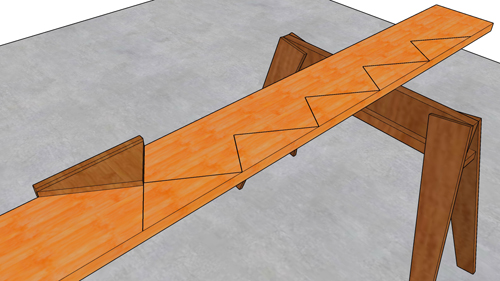
A stair stringer must be entirely replaced when structural cracks, rot, or damage penetrate the minimum effective depth of the lumber. Standard building practices dictate that cut wooden stringers must maintain a minimum solid, uncut depth of at least 3.5 inches beneath the notches to properly carry the load of the stairs. If decay or a severe split compromises this continuous 3.5-inch structural spine, the stringer loses its load-bearing capacity. Splicing or sistering damaged wood in this critical zone is often inadequate for long-term safety, making complete replacement the only code-compliant solution.