Encountering a staircase where the stair treads slope backward toward the riser is a rare but frustrating structural issue. This defect makes the stairway uncomfortable and potentially unsafe to navigate. Correcting this problem requires a strategic approach to structural modification, ensuring the final result provides a stable, level walking surface that restores functionality to the home.
Understanding The Root Cause
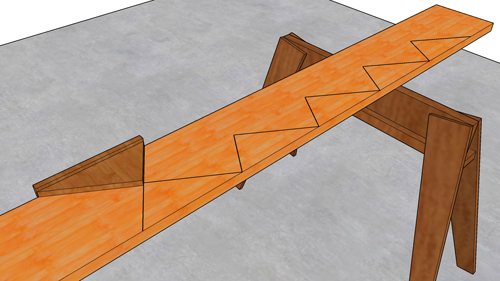
When treads slope backward, the fundamental issue is that the stair stringer was installed at an incorrect angle. Often, this happens because there are too many steps squeezed into a specific horizontal run, causing the entire stringer to pitch upward too steeply. Because the notches in the stringer were cut for a different angle of descent, the treads end up tilting backward instead of sitting level.
The Strategy For Correction
To remedy a backward sloping staircase, the overall pitch of the stringer must be lowered. While it might be tempting to alter the top of the staircase, the most effective structural solution usually involves modifying the bottom. By cutting away the bottom step and allowing the entire stairway structure to drop, you alter the resting angle of the stringers. This rotational drop levels out the horizontal cuts on the stringer, correcting the backward slope of the treads so they sit flat.
Executing The Repair Safely
Dropping an entire staircase is a major structural alteration. Before making any cuts to the stringer or the bottom step, the entire stair carriage must be temporarily supported with heavy-duty bracing. Once the bottom section is removed and the stairs are carefully lowered into their new position, the underlying framing must be completely rebuilt. This includes modifying the supporting walls and structural bracing beneath the stairs to securely carry the load at the new, corrected angle.
Three Key Tips For Adjusting Sloped Stairs
Securely brace the entire stairway structure to prevent collapse before making any cuts or removing the bottom step.
Remove the bottom tread and riser section to lower the stringer pitch, rather than attempting to alter the top connection.
Rebuild and reinforce all underlying walls and support framing beneath the carriage once the stairs are dropped into their new position.
Bonus Questions And Answers
When modifying an existing staircase, it is vital to keep uniformity in mind.
What Is The Maximum Allowed Variation In Riser Height?
According to the International Residential Code, the greatest riser height within any flight of stairs shall not exceed the smallest by more than three-eighths of an inch. When you drop a stairway to fix sloped treads, you must measure every step to ensure this strict uniformity is maintained. A variation larger than this creates a severe tripping hazard because the human brain anticipates consistent step heights while climbing.
To ensure your newly adjusted staircase is safe, you must verify the final step dimensions.
What Are The Minimum And Maximum Dimensions For Residential Stairs?
Standard building codes dictate that the maximum riser height is seven and three-quarter inches, and the minimum tread depth is ten inches. Modifying the angle of your stair stringer will slightly alter both the effective tread depth and riser height. Always verify that your adjusted stairs still fall within these critical safety parameters, keeping in mind that local jurisdictions may enforce even stricter dimensional requirements.
While fixing a severe backward slope is the primary goal, you might wonder if any slope is permitted at all.
Are Stair Treads Required To Be Perfectly Level?
While interior stair treads should ideally be perfectly level, standard building codes do allow a very slight slope for drainage, particularly for exterior stairs. The maximum allowable slope on the walking surface of a tread is two percent, which equates to one unit vertical for every forty-eight units horizontal. Anything exceeding this, especially a backward slope that traps feet or alters balance, violates safety standards and must be corrected.