Understanding Stucco Cracks And Your Building Envelope
Cement stucco is a durable, long-lasting exterior finish, but it is inherently prone to cracking over time. Because cement products naturally expand and contract in response to fluctuating humidity, temperature changes, and weather conditions, a flawless, crack-free exterior is virtually impossible to guarantee. For homeowners, the primary concern is determining whether a visual blemish is simply an aesthetic nuisance or a serious threat to the underlying structural framing.
The Stucco Wall Assembly Explained
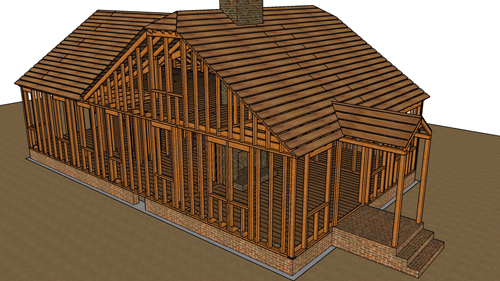
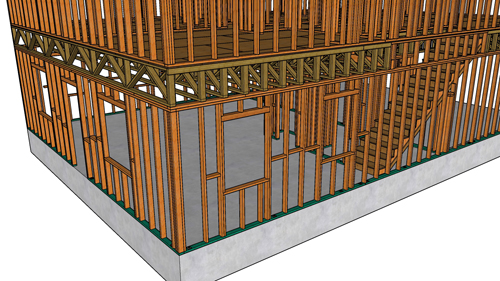
To understand why some cracks are harmless, you must first understand how a properly built stucco wall is constructed. The protective system relies on multiple layers working together. Over the wood structural framing, builders apply a weather-resistant barrier, often referred to as building paper or house wrap. This material forms the actual protective building envelope, shielding the interior from outside elements.
Over this weather-resistant barrier, a metal wire lath or stucco netting is fastened. The wet cement stucco is then troweled directly onto this lath. Because the building paper and the lath are installed as two distinct layers, the outer stucco shell can experience minor movement, expansion, and contraction independently from the moisture barrier. This vital separation allows the cement to shift and form minor surface fissures without necessarily tearing the paper beneath it.
Harmless Hairline Fissures Versus Structural Threats
Not all cracks penetrate deeply enough to ruin your protective envelope. Hairline cracks are incredibly common and usually represent normal curing or thermal expansion. According to the mechanics of the wall assembly, surface gaps that measure a quarter of an inch or less might not penetrate deep enough to tear the underlying weather-resistant barrier.
However, size and surface alignment are critical indicators of deeper issues. If you observe a gap that is a half-inch wide, or notice differential settlement where one side of the crack rests lower than the other side, you are likely looking at structural damage. This type of severe wall movement is highly likely to tear the building paper, allowing moisture to reach the raw wood framing and invite rot or mold.
Monitoring And Maintenance Best Practices
Proactive observation is the best defense against exterior moisture damage. For small gaps that measure an eighth of an inch or larger, you can apply a high-quality exterior caulking to seal the breach and prevent water intrusion.
For smaller hairline fissures, active monitoring is highly recommended. The most effective strategy is to routinely inspect your exterior walls, take clear photographs of any blemishes, and record the dates. By establishing a visual baseline, you can easily determine if a minor fissure is slowly widening into a major structural threat that requires professional intervention.
Three Key Tips
Track Crack Progression With Dated Photographs
Do not rely on memory to determine if exterior wall damage is spreading.
Walk the perimeter of your home and take clear photographs of every visible fissure.
Store these images with their corresponding dates so you can accurately measure any expansion over time.
Seal Gaps Exceeding One Eighth Of An Inch
While microscopic surface flaws can be left alone, wider gaps leave your wall vulnerable to wind-driven rain.
Purchase a flexible, weather-resistant exterior sealant designed specifically for masonry or cement products.
Thoroughly fill any gaps measuring an eighth of an inch or wider to prevent moisture from reaching the building paper.
Differentiate Between Aesthetic And Structural Displacement
Pay close attention to the physical alignment of the cement on either side of the gap.
If the wall remains perfectly flat and smooth across the breach, the issue is likely due to normal thermal expansion.
If one side of the crack is projecting outward or sitting noticeably lower than the other side, consult a structural engineer immediately.
Bonus Questions And Answers
What Purpose Do Stucco Control Joints Serve In Preventing Cracks?
While understanding existing cracks is vital, modern construction uses specific techniques to control where new ones form before they ever happen.
According to ASTM C1063 standards, which dictate the installation of lath and plaster, contractors are required to install control joints at specific intervals across large wall expanses. Because cement shrinkage during the curing process is inevitable, these metal or plastic joints create intentional, pre-determined weak points in the wall. Instead of spiderwebbing randomly across the facade, the cement will cleanly separate inside the hidden channel of the control joint, preserving the aesthetic appearance and integrity of the weather-resistant barrier.
How Does Proper Window Flashing Interact With The Stucco Envelope?
Beyond the expansive wall surfaces, penetrations like windows and doors are the most vulnerable points for structural moisture intrusion.
Building codes require strict adherence to window flashing integration because a wall is only as waterproof as its weakest penetration. The weather-resistant barrier must be layered in a shingle-fashion with specialized flashing tapes around the window flange. The sill flashing must direct water outward, and the top window flange must be tucked beneath the building paper. If this integration is done incorrectly, water flowing down the face of the weather-resistant barrier will easily bypass the window frame and leak directly into the interior wall cavity, regardless of how intact the surrounding exterior cement happens to be.