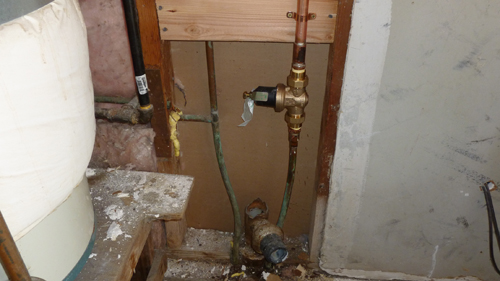
Hidden Moisture Damage Behind Hose Bibs And Exterior Walls
Exterior plumbing fixtures create vulnerable penetrations in a building envelope. While hose bibs are necessary for exterior water access, the point where the plumbing breaches the exterior wall is highly susceptible to water infiltration. Because the structural framing and weather-resistive barriers are concealed behind exterior cladding and interior drywall, compromised installations often go unnoticed by homeowners and building inspectors alike.
The Hidden Threat In Wall Cavities
When an exterior hose bib is installed, adjusted, or repaired from the outside, the weather-resistive barrier behind the exterior cladding is frequently torn or compromised. This barrier, typically building paper or house wrap, is the primary line of defense against water that bypasses porous exterior finishes like stucco.
If the paper is ripped and left unsealed, incidental moisture can seep directly into the wall cavity. Because this damage is hidden, it often takes years for the resulting wood decay or mold to become visible from the inside. Revealing the interior wall cavity during a drywall remodel is often the only way to uncover these latent defects.
Professional Repair Methods For Weather Barriers
The structural integrity of the bottom plate and wall framing relies entirely on a continuous drainage plane. When torn building paper is discovered behind a hose bib from the inside, a localized patch using high-grade polyurethane sealant and replacement building paper can mitigate the issue. However, this is considered a secondary interior fix.
The universally accepted best practice for maintaining a continuous weather barrier requires removing a section of the exterior stucco around the penetration. This allows a professional to properly layer and overlap the new weather-resistive barrier in a shingle-style fashion, which is required by standard residential building codes to ensure water sheds downward and away from the wall cavity.
Environmental Factors And Moisture Evaporation
In some scenarios, a compromised wall penetration may not immediately result in catastrophic rot due to favorable environmental conditions. If a damaged weather barrier is located on a south-facing wall that receives full, direct sunlight throughout the day, the rapid evaporation of incidental moisture can act as a natural defense.
The high heat can dry out the sill plate and framing studs fast enough to prevent the prolonged dampness required for mold, mildew, and fungal wood decay to thrive. Nevertheless, relying on solar evaporation is a fortunate coincidence, not a substitute for proper flashing and weatherproofing.
Three Key Tips
Inspect wall cavities during remodels. Whenever interior drywall is removed for renovations, actively inspect the backside of all exterior wall penetrations. This is a rare opportunity to identify and repair compromised building paper before structural rot occurs.
Prioritize exterior repairs for weather barriers. While sealing from the inside is better than nothing, always execute weather-resistive barrier repairs from the exterior when possible. This allows for the proper integration and overlapping of materials required to shed water effectively.
Use the correct exterior sealants. When sealing around plumbing penetrations, avoid cheap interior caulks. Utilize high-quality, exterior-grade polyurethane sealants that offer flexibility and strong adhesion to both masonry and weather barrier materials.
Bonus Questions And Answers
While addressing immediate repairs is crucial, understanding the broader building science behind exterior wall penetrations can help you prevent future structural issues.
What Are The Building Code Requirements For Sealing Exterior Wall Penetrations?
The International Residential Code mandates that all exterior openings and penetrations into the building envelope must be flashed or sealed to prevent water entry. This means a hose bib cannot simply be caulked to the surface of the stucco. The actual weather-resistive barrier behind the cladding must be integrated with appropriate flashing or approved sealants to maintain a continuous, uninterrupted drainage plane across the entire wall assembly.
Why Is A Torn Weather Barrier A Severe Threat To Structural Framing?
Wood framing, particularly the bottom sill plate resting on the foundation, is highly susceptible to decay if exposed to chronic moisture. The weather-resistive barrier is specifically designed to stop water that bypasses primary cladding systems. If this paper is torn, trapped moisture cannot escape the enclosed wall cavity, leading to fungal growth and wood rot that will eventually compromise the structural load-bearing capacity of the exterior wall.
Do Frost-Proof Hose Bibs Require Special Installation Considerations?
Yes, frost-proof sillcocks must be installed with a slight downward pitch toward the exterior of the home. This standard installation practice ensures that when the water is turned off, the remaining water inside the long pipe barrel drains out completely. If the fixture is installed perfectly level or pitched inward, water can remain trapped and freeze inside the stem during winter, expanding and bursting the pipe within the wall cavity.