The Hidden Dangers Of Aging Aluminum Windows
Older homes possess immense character, but their aging building materials can often conceal significant structural issues. One of the most common culprits for hidden wall cavity damage is the vintage aluminum window. While these units were standard practice in mid-twentieth-century construction, their outdated design often leads to severe moisture intrusion and subsequent pest infestations over time.
Why Vintage Aluminum Windows Leak
Older aluminum windows, particularly those manufactured before the 1980s, possess a fundamental design flaw at their lower corners. Where the bottom track meets the vertical side channels, the metal extrusion is typically cut at a mitered angle. In older units, these joints lack any type of sealant. When interior or exterior condensation builds up on the glass and runs down into the track, the water easily seeps through these unsealed joints. Over decades, this weeping action directs water straight into the wooden rough opening surrounding the window frame.
The Link Between Moisture And Termite Incursions
Prolonged water exposure inevitably leads to wood rot, which actively attracts destructive pests. Subterranean and drywood termites thrive in moist environments, and a steadily leaking window sill provides an ideal food source. Because this moisture intrusion happens entirely behind the drywall, the resulting termite damage can compromise the rough sill and adjacent load-bearing framing members long before any visible signs appear inside the living space.
Addressing The Damage Safely
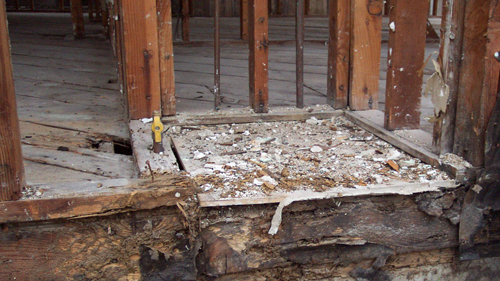
When remodeling requires removing the drywall around a drafty or malfunctioning older window, you may uncover stained wood, deteriorated sills, and obvious termite boreholes. Repairing this requires completely removing the compromised lumber and installing new framing members to restore structural integrity to the wall. However, if your walls are currently intact and the home shows no obvious exterior or interior signs of water damage, it is best to leave the drywall alone. Routine monitoring is far more practical than tearing open walls in search of problems that may not exist.
Three Essential Window Inspection Tips
Monitor older windows for operational failure. Difficulty sliding or locking often indicates structural shifting, frame swelling, or track degradation, which can be secondary symptoms of underlying moisture intrusion.
Inspect window tracks for moisture pathways. Pre-1980s aluminum frames typically lack internal corner sealants. If condensation pools heavily on the tracks, it may be weeping directly into the rough opening. Always monitor the adjacent drywall for blistering, softness, or staining.
Do not ignore persistent drafts. If a closed window allows significant air infiltration, the weatherstripping has failed and the primary building envelope seal is compromised, leaving the surrounding wall cavity highly vulnerable to exterior moisture.
Bonus Questions And Answers
To further protect your home from the structural risks associated with failing building envelopes, here are a few additional insights regarding window replacement and framing codes.
Do Modern Building Codes Require Flashing Around New Windows?
Yes, the International Residential Code dictates that all exterior window openings must be properly flashed to prevent moisture intrusion. Modern installations require a continuous weather-resistant barrier, utilizing self-adhering flashing tape applied to the sill, jambs, and head in a specific overlapping sequence. This creates a shingle effect that forcefully directs any bulk water outward, preventing the concealed structural rot frequently seen in mid-century installations.
What Kind Of Wood Should Be Used When Replacing A Rotted Window Sill?
When replacing damaged framing elements near high-moisture zones, standard building practices strongly favor utilizing decay-resistant materials. Any new framing must be sized and spaced according to local structural requirements. I like to use what is considerede construction standard lumber for your area.
Can I Install A New Window Without Pulling A Permit?
In most jurisdictions, completely removing an existing window and altering the surrounding framing to repair termite or water damage will require a building permit and an inspection. While simple retrofitting or sash-replacement inserts can sometimes bypass permit requirements, structural repairs to the king studs, jack studs, or rough sill must be verified by a local code enforcement official to ensure the structural load path remains intact and the home is safe.