Home Building And Repairs

How To Calculate Length of Stair Stringer - Easy To Understand Construction Tips


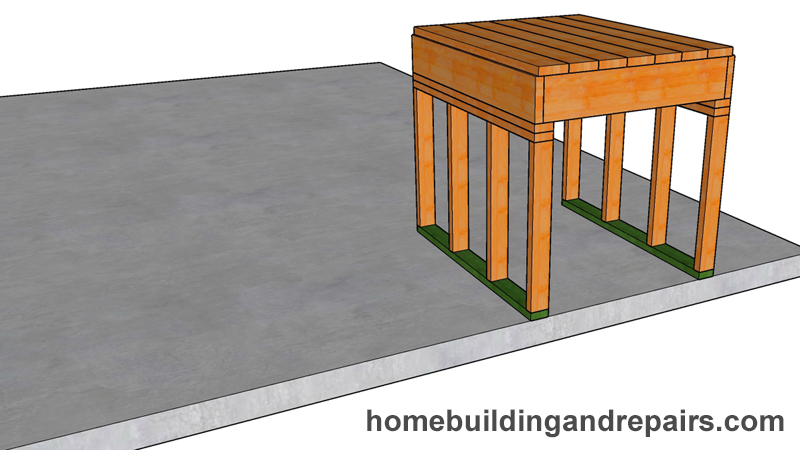
Here's an easier method, but it won't provide an exact length, if you have a situation like this.
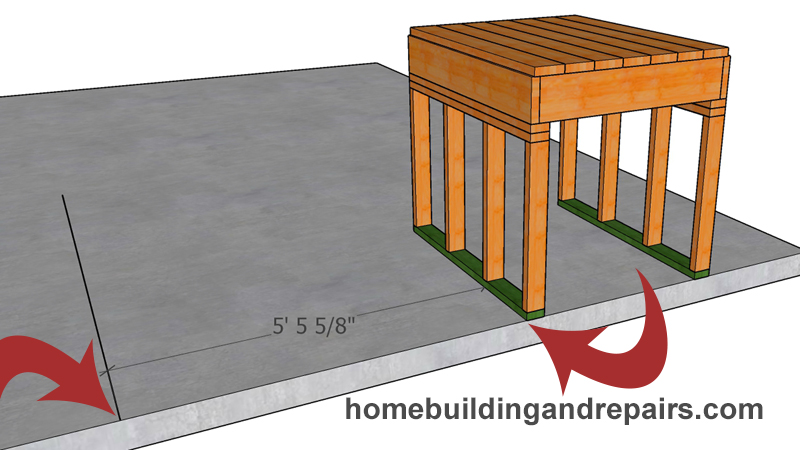

Then you can establisth the stairway starting point.
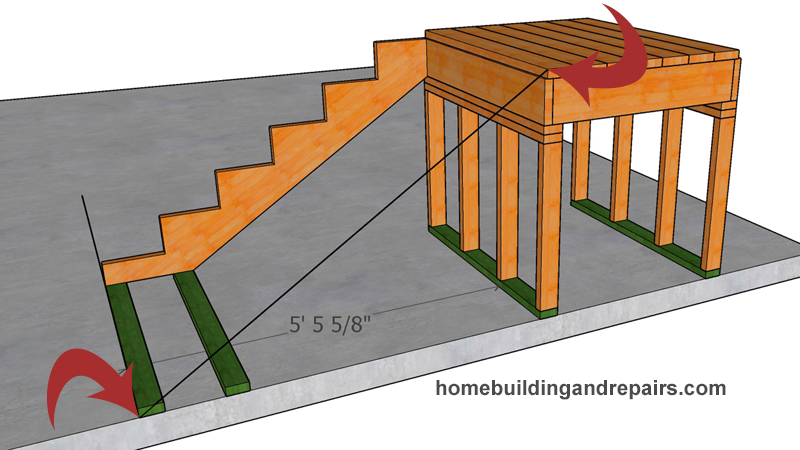

And measure the distance to calculate rough length of stringer. Just add a few inches or even a little more if you can. For example, if my mesurement is 92 inches, then I will need an 8 foot long piece of lumber, but it might be better to get a 10 foot long piece. Then layout my pattern to verify my measurement to purchase the other stringers.
How To Calculate The Exact Lumber Length For Stair Stringers

Building a safe, structurally sound staircase requires precise planning before a single cut is made. One of the most critical preliminary steps in stair framing is determining the exact length of the lumber required for your stair stringers. The stringers are the structural backbone of the staircase, meaning a miscalculation here can compromise the entire project. By relying on fundamental mathematics and taking accurate site measurements, you can ensure you purchase the correct material size the first time.

Understanding The Staircase Triangle

To determine the length of the required lumber, you must visualize the staircase as a large right triangle. The total vertical height from the lower floor to the upper landing acts as one side of the triangle, while the total horizontal distance the stairs will cover acts as the second side. The stringer itself represents the hypotenuse, which is the longest side of the triangle connecting the top and bottom points.

To find the length of this hypotenuse, carpenters rely on the Pythagorean theorem. In this formula, the square of the total vertical rise added to the square of the total horizontal run equals the square of the stringer length.

Applying The Math Formula

Begin by gathering your total vertical rise and total horizontal run measurements in inches. Multiply the total rise by itself to find its square. Next, multiply the total run by itself to find its square. Add those two resulting numbers together.

Finally, calculate the square root of that combined total. The resulting number represents the absolute minimum length of lumber in inches required to span the diagonal distance from the floor to the upper landing. For example, a stair configuration with a 77-inch vertical rise and a 52.5-inch horizontal run requires a diagonal stringer span of just over 93 inches.

Selecting The Right Lumber

Once you have your final diagonal measurement, you must convert those inches into standard lumber dimensions. Because lumber is sold in two-foot increments, you will need to round up to the nearest available board size. Using the previous example, a 93-inch stringer span will easily fit on a standard 96-inch, or eight-foot, piece of lumber.

Always factor in a margin of error when purchasing framing materials. The actual plumb and level cuts at the top and bottom of the stringer require a specific footprint. If your mathematical calculation puts you within a few inches of the end of a board, it is highly recommended to upgrade to the next longest size to guarantee you have enough material to safely secure the stringer to the landing header.

Three Key Construction Tips

Always confirm that the structural wall and the lower landing surface meet at a perfect 90-degree angle. If the existing structure is leaning or out of plumb, your mathematical calculations will be slightly inaccurate, resulting in a stringer that does not sit flush against the floor.

Never use lumber smaller than 2x12 for cut stair stringers. The structural integrity of a stringer relies entirely on the uncut portion of the wood remaining beneath the notches.

When measuring the total vertical rise of your space, do not assume the floor is perfectly level across the entire room. Measure the drop from the exact location where the bottom of the stringers will permanently rest, rather than right against the base of the landing wall.
Our Favorite Construction Books