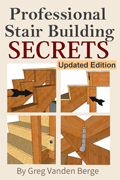
A wobbly exterior stair handrail is more than just a nuisance; it is a significant safety hazard. When a stairway leads up to a deck or landing, the bottom post bears a massive amount of leverage. A common mistake in residential construction is simply attaching the bottom post directly to the concrete pad using a standard baseplate or framing anchor. While this might look finished, it often results in a weak post that can deflect several inches in either direction. Over time, or under sudden pressure, this creates a failing guardrail that will easily catch the attention of a building inspector. To create a structurally sound stairway, you must look beyond basic baseplates and rethink how the post integrates with the stair stringers.
The Problem With Standard Post Placement
The weakest point of any stair stringer is the very bottom corner, also known as the toe. Wood grain runs horizontally, and when you place mechanical fasteners or heavy loads near the tapering end of a stringer, the wood is highly susceptible to splitting and breaking off. Many builders try to align the bottom post perfectly flush with the first step, forcing them to bolt into this fragile, narrow section of the lumber. Even if the treads and risers are securely fastened, the tip of the stringer simply does not possess the structural mass required to anchor a leverage-heavy post.
Strategic Hardware And Through-Bolting
If you must locate the post at the very bottom of the stairs, the orientation of your hardware is critical. Rotating the base hardware ninety degrees often allows you to drill directly through the stringer and the post, providing a much stronger mechanical connection. For maximum rigidity, you can run threaded rod, commonly known as all-thread, completely through the post and multiple stringers. If the span is wide, you can join shorter threaded rods using heavy-duty coupling nuts. When utilizing angle brackets, always upgrade to heavy-duty, reinforced structural brackets rather than lightweight alternatives, and place your through-bolts as high up on the post-to-stringer connection as possible to maximize your holding power.
The Cantilever Method For Maximum Stability
If your design allows for it, the absolute strongest method for securing a bottom stair post is to move it further back up the stair carriage. Instead of attaching the post at the fragile first step, slide its placement back to the second or third step. This provides a much deeper, wider section of the stringer to bolt into. By double-blocking the post between the stringers and bolting it securely, you create a cantilever effect. The continuous handrail will extend past this rigidly mounted post down to the bottom step, resulting in a rock-solid handrail that resists deflection. While this recessed post placement might not appeal to every architect or designer visually, it is the superior choice for structural integrity.
Reinforcing The Top Rail Assembly
The strength of your stairway guardrail does not rely solely on the base connection. The actual lumber used for the top rail plays a massive role in stiffening the entire assembly. Standard two-by-four lumber has a tendency to flex over longer spans. Upgrading the top rail to a three-by-four or even a four-by-four significantly reduces this flex. You can easily route the edges or shape the heavier lumber to create an ergonomic, attractive handrail that provides exceptional rigidity when paired with a securely anchored bottom post.
THREE KEY TIPS FOR STAIR POST INSTALLATION
Avoid The Stringer Tip: Never rely on the narrow, bottom corner of a stair stringer to anchor your post. The wood grain is prone to cracking and splitting under pressure, which will instantly compromise your handrail.
Utilize Threaded Rods: For a superior mechanical connection, drill through the post and the adjacent stringers, tying them all together with heavy-duty threaded rod and structural washers.
Upgrade Your Railing Lumber: Swap out standard two-by-four handrails for three-by-four or four-by-four lumber. The increased thickness drastically reduces lateral flex across the length of the stairway.
FREQUENTLY ASKED QUESTIONS
Understanding Building Code Load Requirements
While securing the base of your post is critical for stability, it is equally important to understand the specific safety standards these connections must meet.
Why do building codes place such a heavy emphasis on handrail rigidity?
The International Residential Code requires that guardrails and handrails be able to resist a single concentrated load of two hundred pounds applied in any direction along the top rail. This simulates the force of an adult falling against or heavily leaning on the barrier. A wobbly post might support casual day-to-day use, but in an emergency slip-and-fall scenario, the leverage applied to the bottom post is immense. If the post is only toe-nailed or attached with a light-duty bracket, it will tear out, failing exactly when it is needed most. Local jurisdictions may have even stricter requirements, so always consult your local building department, but the two-hundred-pound resistance rule is the universal baseline.
Preventing Base Post Rot And Decay
Once your post is structurally sound and meets load requirements, protecting that connection from the elements ensures it lasts for decades.
How can I prevent my exterior stair posts from rotting at the concrete connection?
Wood rot at the base of exterior posts is a primary cause of handrail failure. When end-grain lumber sits directly on concrete, it acts like a sponge, wicking up standing water and ground moisture. To prevent this, always use an elevated standoff post base. These engineered metal bases feature a one-inch plate that lifts the bottom of the wooden post completely off the concrete surface, allowing water to flow underneath and air to circulate. Additionally, treating the freshly cut bottom end of your pressure-treated post with a copper naphthenate wood preservative before installation will provide an extra barrier against fungal decay.
Selecting The Right Fasteners For Treated Lumber
Beyond moisture protection, the physical hardware you choose to secure these structural elements will ultimately determine the lifespan of your stairway.
Can I use standard zinc-plated bolts to attach my stair posts?
No, standard zinc-plated hardware should never be used on exterior decks or stairways. Modern pressure-treated lumber contains high levels of copper-based chemicals to resist termites and rot. When these chemicals come into contact with standard steel or zinc, galvanic corrosion occurs, which will rapidly eat away and destroy the fasteners. You must strictly use hot-dipped galvanized or stainless steel bolts, washers, and nuts for any connection involving exterior treated lumber. Stainless steel is the ultimate choice for longevity, especially if you live in a coastal environment with high atmospheric salt.