Home Building And Repairs

Please Watch This Video Before Repairing Attic or Crawlspace Ventilation Screening

Proper Screening For Foundation And Attic Vents

Maintaining proper airflow in the unoccupied spaces of a home is a critical component of building health and structural longevity. Foundation and attic vents are designed to allow air to circulate freely, mitigating moisture buildup that can lead to wood rot, mold growth, and structural degradation. However, a common and potentially disastrous mistake homeowners and inexperienced contractors make is using the incorrect screening material when repairing or replacing these essential ventilation points.

The Danger Of Window Screens On Vents

When a foundation or attic vent screen becomes damaged, the instinct is often to patch it with standard fiberglass, nylon, or aluminum window screening. While window screens excel at keeping small insects out of living spaces, they are highly detrimental when applied to crawl space or attic vents. The woven holes in window and door screens are simply too small. They severely restrict the volume of air that can pass through the opening. In extreme cases, applying multiple layers of window screen over a vent hole creates a barrier so dense that it acts essentially like a solid piece of plywood, completely defeating the purpose of the vent.

The Correct Material For Vent Screening

To maintain the required airflow while still providing a barrier against rodents and larger pests, standard building practices require a specific type of mesh. The universally accepted and code-compliant material for foundation and attic vents is 1/4-inch by 1/4-inch galvanized metal screen, commonly referred to as hardware cloth. This heavy-duty wire mesh provides the structural rigidity needed to keep out mice, rats, and squirrels, while the larger 1/4-inch openings ensure that the under-floor or attic space receives adequate cross-ventilation without suffocating the building.

Avoiding Blocked Vents From Insulation

Another severe ventilation failure occurs during the installation of under-floor fiberglass batt insulation. It is highly common to find foundation vents completely obstructed by floor insulation that has been pushed too far toward the perimeter foundation walls. Floor insulation must be carefully secured between the floor joists so that it never drapes over or blocks the vent openings. Obstructing these vents traps stagnant, damp air inside the crawl space, rapidly accelerating moisture damage to the wooden subfloor and joist framing.

Conclusion

Proper ventilation is not just a recommendation; it is a vital structural requirement. Always use appropriately sized galvanized metal mesh for vent repairs, and routinely inspect your crawl space and attic to ensure insulation is not choking off the air supply to your home.

Three Key Tips

Use 1/4-inch by 1/4-inch galvanized hardware cloth instead of window screening to ensure maximum airflow while preventing rodent intrusion.

Never layer screening materials over a vent opening, as this dramatically reduces the net free vent area and restricts essential air circulation.

Inspect your crawl space perimeter regularly to guarantee that under-floor insulation is properly secured and is not blocking the foundation vent pathways.

Bonus Questions And Answers

To further expand on the principles of home ventilation and structural codes, here are answers to some common technical questions regarding vent installation that ensure total compliance and building health.

How Does Net Free Area Impact Vent Screen Selection?

Net Free Area refers to the total unobstructed open space within a vent that actually allows air to pass through. When calculating ventilation requirements, the International Residential Code mandates a specific amount of Net Free Area based on the square footage of the crawl space or attic. Using dense window screens drastically reduces the vent's Net Free Area by 50 percent or more due to the thickness and tight spacing of the wire or fiberglass threads. Therefore, using 1/4-inch hardware cloth ensures you maintain the required unobstructed opening size without having to install double the number of exterior vents to meet code compliance.

Can Stainless Steel Mesh Be Used Instead Of Galvanized Metal?

Yes, stainless steel mesh is an excellent, albeit more expensive, alternative to galvanized metal screening. Building codes require vent coverings to be heavily corrosion-resistant. While galvanized steel utilizes a zinc coating to prevent rust, it can still degrade over time, particularly in high-humidity or harsh coastal environments with airborne salt. Stainless steel mesh provides superior long-term corrosion resistance and durability, making it an ideal structural upgrade for properties in coastal jurisdictions, provided the mesh openings remain appropriately sized at around 1/8-inch to 1/4-inch.

Back To Ventilation

Our Favorite Construction Books
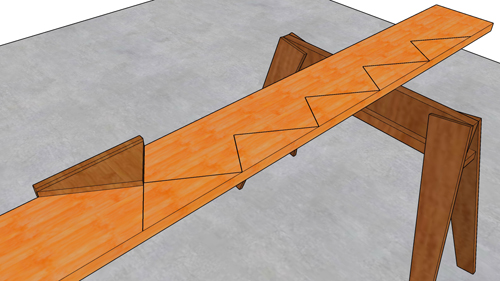
Stair Building Tutorials
Find Out How Do It Yourselfer’s Like You Can Become Great Stair Builders.
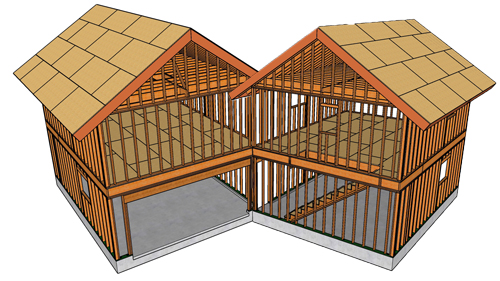
20x24 Garage And Loft
Learn How To Build A Variety of Different 2 Car Garages With Lofts.
1923 Old Home Framing Project
Let’s Take A House Journey Back In Time To Learn More About Old House Construction.
434 Square Feet Home Building Project
Find Out How You Can Build This Small Cottage Style House or Backyard Granny Flat.
Bathroom Remodeling
Check Out Our Helpful Videos Before Your Next Remodel to Avoid Making Dumb Mistakes.
Building Foundations
Learn How to Design and Build Foundations for A House or A House on The Side of a Hill.
Framing Education
Learn More About Wall, Ceiling, Floor And Roof Framing.
Plumbing Repairs
Learn How To Fix Your Own House Plumbing.
Crawlspace Repairs
Watch Our Tutorials if You Need To Replace A Wood Beam or Sagging Floor Joist.
Framing Repairs
We've Got You Covered From Termites To Wood Rot And From Top To Bottom.