Pouring a new concrete walkway is an excellent way to improve your property, but figuring out exactly how much concrete to order can be a major headache. If your path involves bends, turns, or L-shapes with 90-degree corners, measuring the entire area at once might seem complicated. Fortunately, you can use a simple mathematical approach to estimate your concrete needs accurately. This guide will show you how to break your project down into manageable pieces and calculate your total concrete volume in cubic yards.
DIVIDE YOUR WALKWAY INTO RECTANGLES
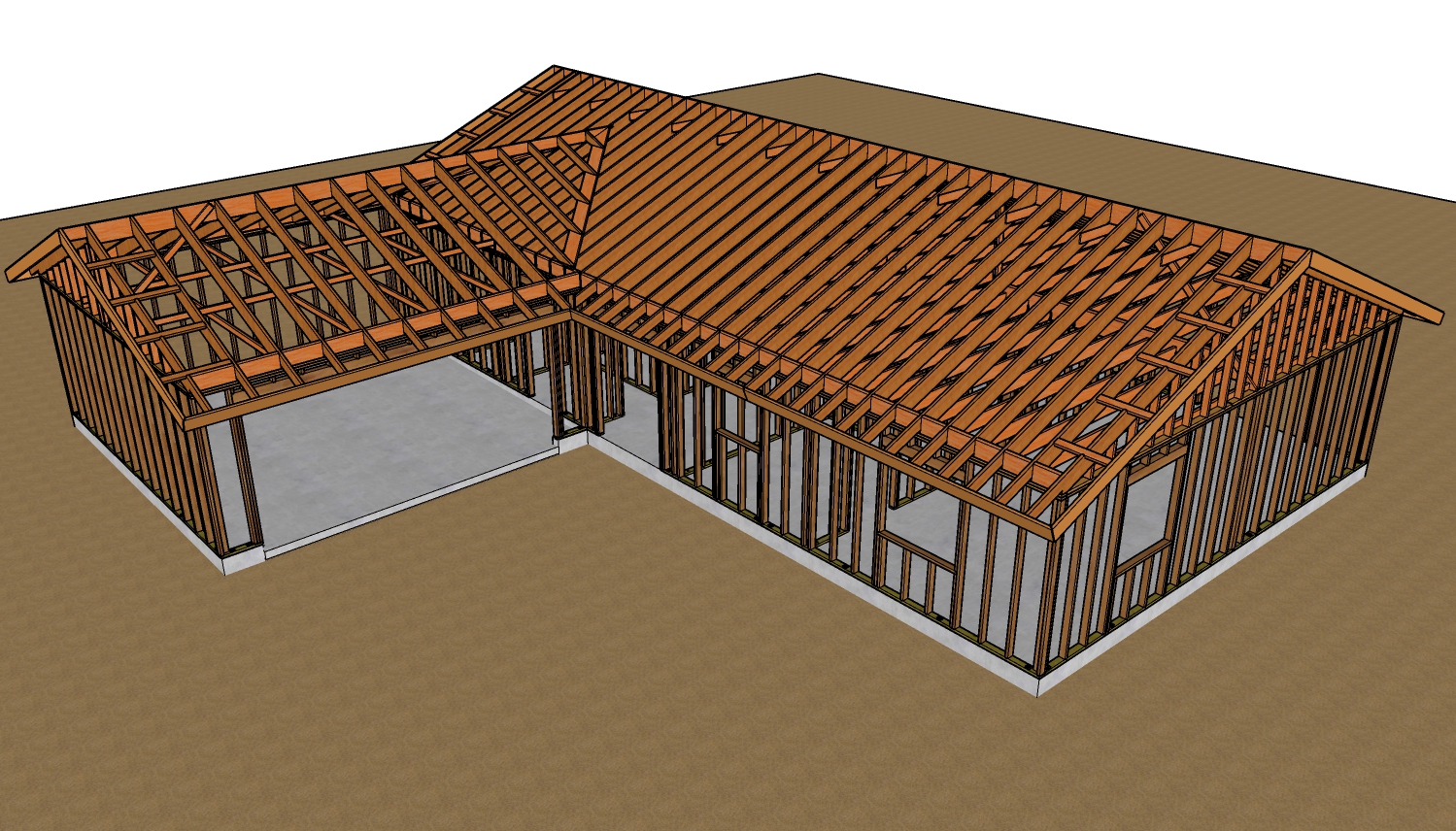
The absolute easiest way to calculate the area of an L-shaped or angled walkway is to turn the complex shape into simple rectangles or squares. You can do this by drawing an imaginary straight line across the corner where the two sections meet. As long as your corners are 90 degrees, this will give you two distinct rectangular sections. It is much easier to figure out the volume of a basic rectangle than it is to calculate a multi-angled shape all at once.
GATHER AND ROUND YOUR MEASUREMENTS
Once you have separated your path into rectangles, measure the length and width of each section. You will also need to know the depth of your concrete pour, which is typically around 4 inches for a standard sidewalk. To keep the math simple, round your fractional inch measurements to the nearest whole number. For example, if a section measures 30 feet 4 and 1/8 inches, go ahead and round it to 30 feet 5 inches.
CONVERT INCHES TO DECIMALS
To multiply your dimensions easily, you need to convert your inches into decimal feet. For instance, 4 inches deep is equivalent to 0.33 feet, and 5 inches is roughly 0.42 feet. Convert all your measurements so that your length, width, and depth are all represented in standard decimal formats rather than a mix of feet and inches.
CALCULATE CUBIC FEET AND CUBIC YARDS
Now it is time to do the math for each individual rectangle. The formula is simple: multiply the length by the width by the depth. For example, a sidewalk section that is 30.42 feet long, 3 feet wide, and 0.33 feet deep (which represents 4 inches) will equal 30.12 cubic feet.
Because concrete is ordered by the cubic yard, you must divide your total cubic feet by 27, since there are 27 cubic feet in one cubic yard. In our example, 30.12 divided by 27 equals roughly 1.12 cubic yards for that single section.
ADD THE SECTIONS TOGETHER
Repeat the multiplication and conversion process for your second rectangular section. Once you have calculated the cubic yards for both pieces independently, simply add those two numbers together. This final total is the exact amount of concrete you will need to complete your 90-degree walkway.
CONCLUSION
By simplifying your walkway into basic rectangles and using straightforward decimal conversions, calculating your concrete order becomes a breeze. You can apply this exact same strategy to any sidewalk, patio, or pathway as long as you are working with 90-degree angles. Take your time, double-check your decimals, and you will have the perfect amount of material for a successful pour.
THREE KEY TIPS FOR CALCULATING CONCRETE
ALWAYS BREAK COMPLEX SHAPES DOWN: Never try to calculate an angled or L-shaped pour as a single unit. Always divide the area into perfect rectangles or squares first to ensure your math is accurate and manageable.
USE DECIMAL CONVERSIONS FOR INCHES: Math mistakes frequently happen when people mix standard feet and inches in the same equation. Always convert your inch measurements, like a 4-inch depth, into decimal feet, such as 0.33, before multiplying.
REMEMBER TO DIVIDE BY 27: Your length times width times depth formula will give you cubic feet, but concrete is ordered and sold by the cubic yard. Always divide your final cubic foot total by 27 to get the correct ordering measurement.